Category: Tips and tricks

Advice from homeschooling parents

  • “Christ at the Centre” – Helen Alexander

    “Christ at the Centre” – Helen Alexander

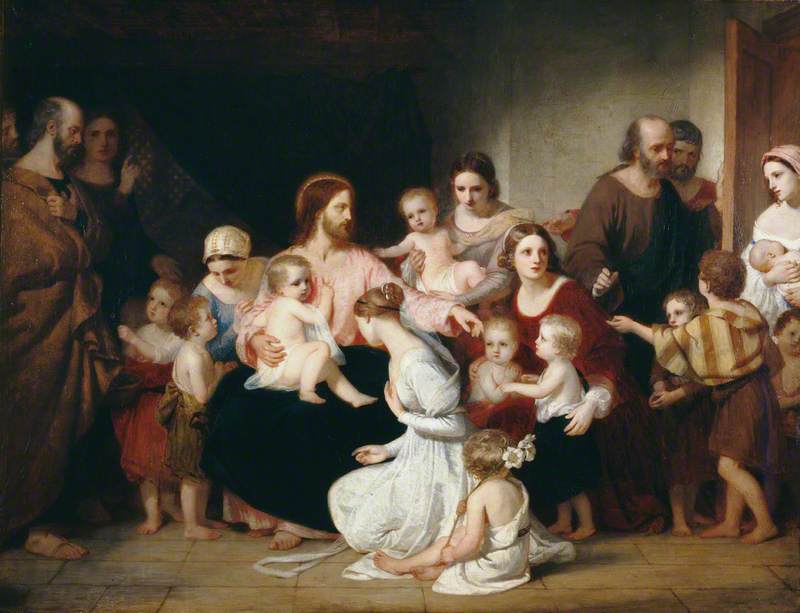
    Image: Charles Lock Eastlake, Public domain, via Wikimedia Commons

    Homeschooling Mum Helen Alexander talks about her homeschooling journey.

    Why did you decide to homeschool?

    Our decision to home school came slowly. As a family, we had been moving quite regularly, and needing to settle kids into new schools had made us consider homeschooling at different times. My sister had been homeschooling her children, so it wasn’t a totally new concept. I am a trained primary teacher, so that also meant that I had confidence that I could lead the homeschooling. Some of my concerns were: could I do it with babies/toddlers around? Would my kids get sick of me (and vice versa)?

    In 2018, we were living in Pukekohe. We had seven kids, aged 16 down to 4 years old. Our kids were at the local a High School, the local Catholic primary school and one of the local pre-schools. Life was busy (as with all families!)

    Nick (my husband) and I were trying to figure out how best to live a life with Christ at the centre, how to keep the Faith alive in our family/kids, and how Nick could be around more to support the family in this endeavour. After discernment – which took a while, lots of discussions together and with others, reading books, prayer etc. – we felt motivated to change our circumstances in a big way. We decided that we needed to downsize our debt, live more simply, and spend more time together as a family, and make new routines that put Christ at the centre of our home.

    All of this accumulated into a move from Pukekohe to Picton in early 2019. That’s when we started homeschooling – at the beginning of 2019 before we moved down to the South Island.

    In your family, what does a typical homeschooling day look like?

    The typical day has changed a number of times over the years, depending on the age and stage of the kids, and myself too!

    We generally have a timetable that is visible to all. Each kid has their own schedule. As they get older and more independent, there is some flexibility about timing and order of subjects. I like to keep to a routine because otherwise it’s too easy to get to the end of the day and realize you haven’t got much work done.

    Do you use any curricula? Any resource recommendations?

    I started with the NZ Curriculum, because that’s what I was familiar with as a teacher. Over the years we have tried and tested a number of different curriculum, based on our own research and recommendations from other people.

    At this stage we use mix and match for each of the kids. We use different resources depending on their needs. We do use Angelicum Academy’s Great Books course for our High School kids and Oxrose for some classical courses. We also use IEW, CTC Math online, The Good and the Beautiful Language Arts, Learn Maths Fast, and I pick up different maths, spelling and writing workbooks to supplement where needed.

    Did homeschooling help form your children in the Faith?

    From 2019-2021 we lived in Picton. At the end of 2021, we moved to Leithfield, North Canterbury.

    The big bonus of living where we do now is that we are close to the Beatitudes community. That means our daily life is connected more directly with the life of the Church. We are walking distance to daily Mass and the sacraments, liturgical celebrations and events, retreats, and Faith groups for our girls and boys supported by the Sisters and Priest/Brothers of the Beatitudes Community.

    We would miss much of these things if we were not as flexible as we are with our home schooling lifestyle. It also fulfils our desire to have Christ at the core of our lives.

    What is your favourite thing about homeschooling?

    The thing I most appreciate about home schooling is the privilege of being connected to your kids in a way that is more than an academic education. When we started home schooling, I thought that if by the first holiday break I hadn’t killed anyone, and the kids didn’t want to kill me, then we were probably doing okay!

    But what I found is that, although not every day was easy, it just felt like the right thing for all of us.

    Initially our kids were reluctant to be ‘different’ as homeschool kids. Now they say they will homeschool their kids…I think that means we are doing okay.

    What is the hardest thing about homeschooling?

    The hardest thing about homeschooling is being confident that you are giving your kids what they need and that you, as the teacher, are doing a good job.

    I think too, we need to be careful about comparing ourselves – what we are doing, learning, teaching – with other families. The beauty of homeschooling is that we can meet the needs of our kids in our own way.

    What is one piece of advice you would give to every homeschooling mum?

    Try different approaches/curriculum – but borrow them if you can. It can be very costly to buy your own resources and then find out it doesn’t work well for you or your kids.

    And also, remember, on your ‘not so great’ days, that it’s okay to get in the car and go to the playground, or watch a documentary if needed.

    Do you have any other insights to share about homeschooling?

    Even though I am a trained primary teacher, I have learnt much more about education and learning through being a home school Mum. I think that homeschooling parents should take confidence in the fact that they want the best for their kids and will find a way to provide what they need. They don’t need to be a trained teacher to provide their kids a decent education.

    Since the beginning of our home schooling journey we have moved more towards a liberal arts focused education for our kids. We are not providing a strictly traditional liberal arts education. We incorporate what we can, when we can. Nick has been involved with ‘The Thomas More Society‘ which is helping to bring liberal arts learning experiences to Canterbury. They have run a number of intensive courses for different age groups. They have included experienced liberal arts teachers/lecturers including Ben and Eliza McCabe from the Augustine Academy in Australia, and Dr Paul Morrissey the President of Campion College in Sydney.

    These experiences have opened our family up to the richness and depth of our Catholic teaching traditions. It has been one of the more important aspects of our homeschooling life because it helps to bring Christ into every part of our lives. It means we don’t put our Faith into a compartment in our life – of Sunday Mass or morning prayer – but rather, it can permeate throughout our lives in all we do – well, our best effort to do so, as imperfect as we are.
  • Homeschooling in the Faith

    Homeschooling in the Faith

    Image: Aulnoy, Madame d’ (Marie-Catherine), Public domain, via Wikimedia Commons

    An interview with an amazing homeschooling mum. Anonymous.

    Why did you choose to homeschool?

    The sex-education in schools – too much information for little people! I thought “I don’t want my littlies to have their innocence taken away sooner than it has to be, thank you!”

    Faith. I could see the trends; so many children were losing their faith and I wanted my children to keep their faith.

    And I wanted to like my children, and I wanted my children to like each other and to get on. I didn’t want to be a parent that said “I’m so glad my kiddies have gone to school today; oh no the holidays are coming on.” I didn’t want to have that kind of thinking.

    What did homeschooling look like for you on a day-to-day basis?

    I can freely admit I wasn’t a very good homeschool teacher for a start off, because I had no teaching background. I just went with the principle that generally any kind of teaching was better than being at school, and most mothers could manage it [homeschooling]. I went with that. Over time I found it wasn’t that simple, and it was much harder than I thought it was!

    I did try a variety of curricula. In terms of the children learning their Faith, one book we used was Christ the King, Lord of History. And Seton, I wanted to go down that path too, but that became too hard and to expensive. The other one was Saxon math. I used a few others ones. In the way of science we didn’t get a lot achieved. We did quite a lot of activities outside of home.

    What did socialization look like for your family?

    We spent so much time socializing we had to reign ourselves in and come back and do some paperwork!

    Soccer, swimming, ballroom dancing, cycling, gym. Quite a lot of music. Junior choir, flute, piano, violin, sewing, and basketball.

    How did you bring the Faith into your day-to-day life?

    It was the rosary, really. Going to Mass, and learning about the Traditional Mass. Then Stations of the Cross, and adoration.

    What was the best thing about homeschooling?

    Watching the children grow in their Faith. And also their singing.

    I had said a prayer to Jesus one time when we were at Mass in the Cathedral. I said to our Lord, “if they can only use their voices to praise you and to honor you, then it’ll all be worthwhile,” and indeed that became the case. God really heard that prayer.

    What was the hardest thing about homeschooling?

    Getting the paperwork done, getting the schoolwork done, and figuring out what they needed for their future.

    What advice would you give to other homeschooling mums?

    If you have to pay for tutors, pay for tutors.

    The children need both religion and education.

    Pay attention and encourage them in their strengths!

  • Homeschooling Mum & Camp Organizer: Lynn Burton

    Homeschooling Mum & Camp Organizer: Lynn Burton

    Watch the Full Interview Here

    Lynn has been homeschooling since 1997. Her eldest three went to school for a time, and then, because of bullying issues, she and her husband decided to try homeschooling for six months. Lynn had always been interested in homeschooling, and said, “I believe that it was something that the Lord put on my heart to do.” Lynn is a mum of thirteen, and she still homeschools her youngest two.

    There were less resources available in 1997 then there are now, and Lynn talks about how she started homeschooling with a Protestant curriculum. Then, she started adding Catholic material and she “really began to develop our own curriculum and our own program.”

    Lynn was “very influenced by Charlotte Mason’s philosophy of education,” and likes good books; she says “we’ve all been quite voracious readers.” She mentions Real Learning: Education in the Heart of the Home, by Elizabeth Foss. Elizabeth Foss was a mum of seven, and so has some good advice to offer for large families.

    Lynn mentions that all her kids have some level of dyslexia. Homeschooling gave Lynn “the ability to…adapt curriculum to suit their needs and their struggles, and it’s allowed us to maintain their self-esteem and their learning while making allowances for where their struggles are.” Some of her children went for assessments, and “while reading abilities have been, because of their dyslexia, below their age-group, their vocabulary, their comprehension, their word knowledge, has all been a few years above.” Lynn could cater to the needs of each child through homeschooling, especially when “what worked for one child didn’t always work for the next child.” Lynn continues, “often their self-esteem, which could have been eroded in a school setting, was preserved by homeschooling.”

    Homeschooling has also helped the Burton family grow closer to each other. Lynn says, “The family relationships, the lifestyle relationships, that keeps the family unit together in a different way than sending them to school does.”

    The Burton family live in the country, which can be a little isolating. There was one other Catholic homeschooling family living close by, but otherwise “a lot of the time we were on our own.” Lynn made an effort to take her children to events like March for Life and Christus Rex. In 2001, along with another family, Lynn started a Catholic homeschooling camp. This gave her children the chance to be around priests, religious, and other Catholic kids, and forge lasting friendships.

    A typical day at the camp will start with 9am Traditional Latin Mass, followed by morning tea, and then talks and Catechesis. Sometimes some people chant the office, or there is Catechesis of the Good Shepherd, or Culture Project sessions.

    Lynn says “It is authentically Catholic…we are unapologetically Catholic.” Once, someone who wasn’t Catholic at the time attended a camp and “she is now Catholic.” The camp will occur for the twenty-fourth time this year.

    Watch the Interview

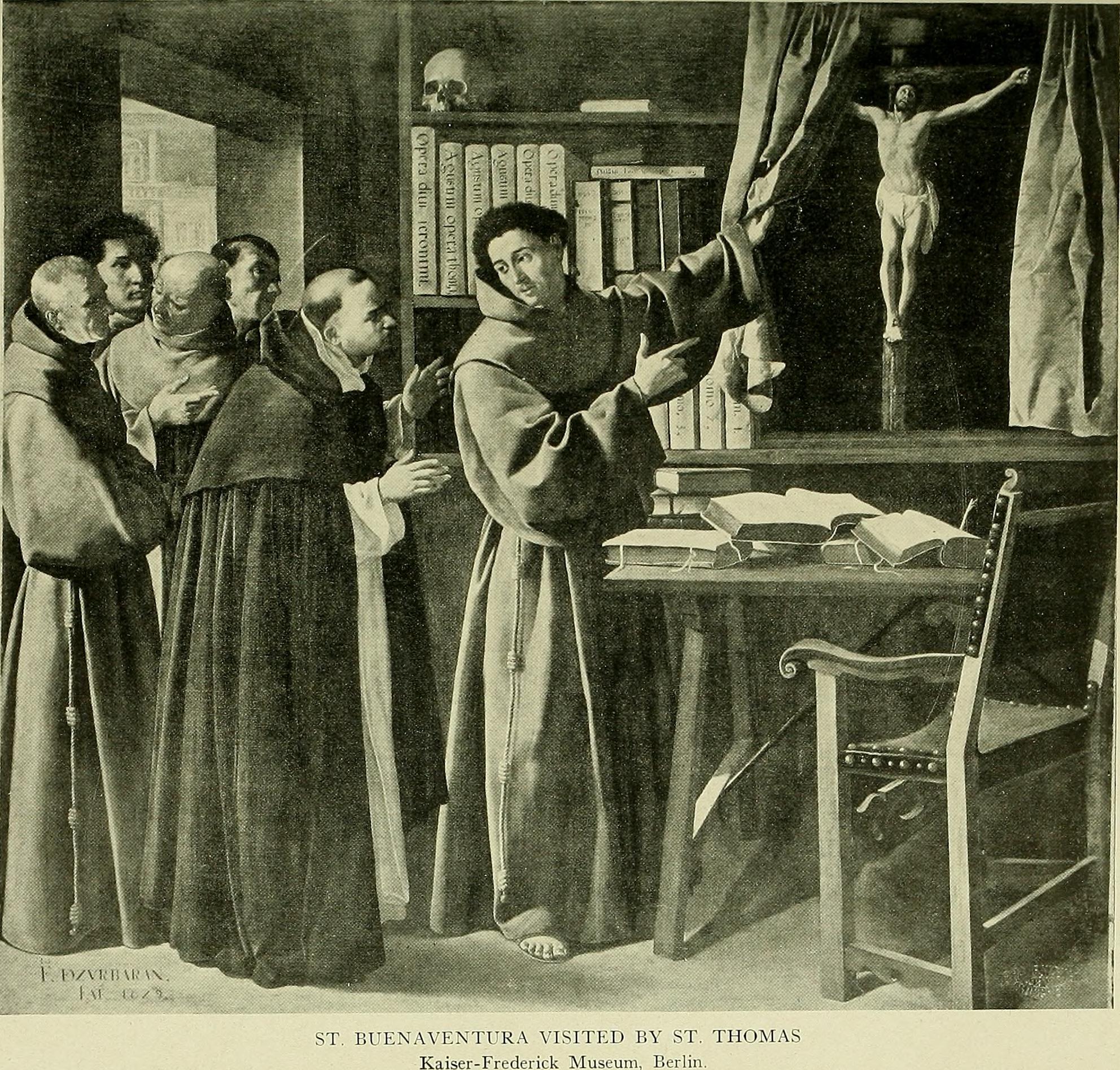
  • “His curriculum is holiness.” – Marian Le Grelle

    “His curriculum is holiness.” – Marian Le Grelle

    Image: Francisco de Zurbarán, No restrictions, via Wikimedia Commons

    Written by Marian Le Grelle

    AMDG 

    “But he that shall scandalize one of these little ones that believe in me, it were better for  him that a millstone should be hanged about his neck, and that he should be drowned in the  depth of the sea. Woe to the world because of scandals.” Matthew 18:6 

    On pilgrimage, I asked God to show me His will for my life within the vocation of marriage  and motherhood. The answer was a clear, “Take the children to daily Mass.” Confirmation  came in writing with the words that followed explaining that children console Him for the  ingratitude of others. 

    Homeschooling was a decision to follow my conscience. My conscience said, “Don’t hurt  the children by having them lied to by people in authority over them.” Parenthood entails culpability; we are responsible before God for our choices in our children’s education. 

    The greatest gift of homeschooling is being in relationship with God as a family. It’s a  privilege to get to know and to love each child. It’s a privilege to watch them grow while  growing closer to God and to each other day by day. 

    His curriculum is holiness. Virtues and gifts of the Holy Ghost cover most topics and the  assignments consist of loving one another while juggling pregnancy, moving, sickness, birth,  death, daily duty, study, acts of charity to others, and recreation. These crosses and joys are  part of the graduation program and are far more powerful than academics in shaping our  families into His image. 

    Today there is much support for homeschooling in online schools and in homeschool  groups. We’ve been blessed to have the help of our priests and religious as well as Mother  of Divine Grace School, an American online school which allows us to be the primary  educators of our children. They know why we are homeschooling and want to help us teach  the faith of the apostles to our children that they may know their faith. They know we  aren’t perfect and help us on our way. 

    Many assume that we must be patient because we homeschool. We aren’t naturally  patient, but we get a lot of practice in that virtue and a lot of reasons to approach the  sacraments. We can’t control what happens in our relationships with each other, but as  principals of the school, we can set the house rules and choose our responses to what God  allows in our relationships. We can teach love and truth and leave the rest to God.  

    St.Thomas Aquinas once asked St. Bonaventure in which books Bonaventure had learned his “sacred science.” St. Bonaventure pointed to the crucifix and answered, “This is the source  of all my knowledge.” The saints give every homeschooler confidence and hope that he or she will turn out okay and much better than okay. They become the saints they are called  to be because they know themselves and discern the will of God in their lives.

  • A Love of Learning? Why Not.

    A Love of Learning? Why Not.

    Written by Emma Button

    This article is from a few years ago, but is still very relevant now. Image and article used with the kind permission of Family Life International, Australia. Original source: FLI homeschooling, FLI website.

    Emma Button is a catholic home schooling mother of 8 children from Sydney. An architect by training, Emma has a passion for art and literature. She and her husband Sam have been married for almost 20 years.

    When I was growing up some of my friends were home schooled and to me, they lived such a joyful and free life. I went to the local Catholic primary school and later an all-girls Catholic high school. I found school oppressive and was so happy when I finished. My schooling confused me spiritually, as religion teachers were teaching contrary to what my parents taught me at home. When I married and had my first child, the thought of putting him into the school system didn’t appeal to me. We wanted our children to enjoy their childhood without the pressures that school can bring and the possibility of losing their innocence prematurely. My husband and I now have eight children and have been home schooling for 12 years. Although it hasn’t been easy, I can still say that I’m glad we chose home schooling.

    My first years were full of doubts, especially when it took longer than expected for our son to start reading. Now that he is 17 and reading Thomas Aquinas’ Summa, for one of his subjects, those worries feel far behind me. My teenagers will often recommend books to me that I am yet to find the time to read.

    Fostering a love of learning is really the key to your children becoming their own teachers. I have always tried to read aloud to our children, starting with picture books, followed by fairy tales and classic novels. The books I read while at school are not worth mentioning. Which meant the first time I read many of the classics was to my children. I think that they could see in my face and hear in my voice that I was as delighted as them by what I was reading. Our reading time can be amazingly peaceful, but at times it’s chaotic too, as it is interrupted by a crying baby or a toddler trying to compete with my reading by singing louder than I can speak. Living in an age when technology and in particular television is so prevalent, the skill of using your own imagination to visualise a story as you are hearing it is something of a lost art. One of my sons prefers not to watch movies at all partly because he prefers to read and create his own mental images.

    When we told some of our relatives that we wanted to home school they were worried that our children would be deprived of special milestones. “What about the school photos? What about their school formal or graduation?” Home schooling still has its milestones, like performing at a music recital, ballet concert, or speech recitation. Our relatives are used to us home schooling now, though for many people their questions stem from home schooling being something ‘unknown’.

    There are the hard days when I think a particular child is trying to torment me by taking an hour to write one sentence and complaining all the while, and there are good days when they read you a great poem they have written. Other days I will explain the same mathematics concept from every possible angle and receive the same blank stare at the end of it, but the following day will see our child’s eyes widen in an ah-hah moment as I attempt to explain it again. People say to me “you must be so patient”, but I don’t think it’s patience to grit your teeth when you would rather scream!

    One of the hardest aspects of parenting is guiding and forming your child in good habits. When you are around your children all day, there are plenty of opportunities to see any bad habits forming and try to curb them. As their parent you can come at this from a place of deep love for them, and you can give feedback and criticism which they will more likely listen to.

    Perseverance is so important because as with anything worthwhile, there will be challenges. I’m not saying everything will turn out perfectly, but in time you will start to see the fruit of all your hard work. In the words of the Greek playwright Sophocles, who I wasn’t fortunate enough to learn about at school: “without labour, nothing prospers.”

    Article Originally Published:

    Button, Emma, “A Love of Learning? Why Not.” FLI HomeschoolingFamily Life International website, Australia.

    You might also enjoy a more recent article and interview with Ambrose Button.

  • Using a Classical Curriculum: Deborah Marambos

    Using a Classical Curriculum: Deborah Marambos

    Watch the Full Interview Here

    Deborah has been homeschooling for fifteen years, and has used resources from a classical curriculum from the start. She said, “I was attracted to the idea of teaching children according to their developmental stages.” She liked the idea of teaching children orally first, when they are younger and good at memorization, and then building their grammar and logic towards being able to “put forward an argument beautifully and persuasively.”

    With the younger children, she reads to stories to teach sequencing, and then, when they get older, “they’re getting those reasoning faculties and they want to try and..argue about something, so it’s good to give them a topic to argue about, rather than, you know, the chores.” Her younger ones memorize poetry. She mentions A Child’s Garden of Verses, Mother of Divine Grace resources, learning about art, artists, music, and composers, facts about geography and maths, and Latin and Greek flashcards. For developing argument skills when they’re older, she talks about debates, and writing papers on their opinion, as well as discussions in their MODG online classes.

    Deborah talks about her decision to use MODG. The Maramboses were living in England when she started homeschooling, and MODG was the curriculum that many other homeschoolers used. When they moved to New Zealand, Deborah tried other resources, but returned to MODG. She says, “I could get a lot of support from them, the curriculum was quite well established, and, for a large family, it’s quite affordable, they really cater to large families as well, so we appreciated that.”

    In MODG, Deborah enrolls the family, and a consultant helps plan school year for each child. Debora says “although they have set curriculum, there’s quite a lot of flexibility, and you can also use your own curriculum…I enjoyed having that support from the consultant, and my consultant’s just been fantastic. At any point I can email her and say ‘I’m struggling with this,’ ‘I don’t understand that’ or ‘this child’s finding this curriculum difficult’ and she’s happy to accommodate that or give me some advice.” Each child received a student page with a printable list, allowing the older ones to be more independent. Having the curriculum gives Deborah time to do other things like cooking, cleaning, and “managing the home.”

    Deborah says, “The way its [MODG] helped me is it’s a very strong Catholic curriculum, and for me that was the most important thing. Not having a strong Catholic education myself, I wanted someone to support me in teaching the kids and I didn’t want to be missing out on important facts…so that’s what we wanted above all.”

    MODG is Northern-hemisphere based, which can be a challenge. However, the kids actually enjoyed learning American history, such as reading Laura Ingalls Wilder. The math is not specific to any hemisphere. Geography can be a bit different. You can still do New Zealand history though. Sometimes school holidays are a little different, and Deborah says the “classes sometimes are very early in the morning, but my kids have really liked getting up early, some of them have really enjoyed having an excuse to get up at five o’clock in the morning, to be in classes. But then again, those are optional..I found them very accommodating.”

    Deborah compared classical homeschooling to her own education in a school. Sometimes at school, kids are expected to write quite early. Deborah says, “I really struggled with writing at school and we didn’t do a lot of writing. I don’t think it was taught very well at my school.” in classical education, “the kids really learn to think about things, that’s one thing I’ve appreciated…you can slow down the amount of information that you’re giving them, and rather, do less, but think more deeply about the information. When [I] did school a lot of it was exam-focused…I like to think that the kids, our kids, have had more of an opportunity to explore different subjects, and to think about what they’re learning, rather than just trying to pass the exams.”

    Deborah talks about learning the Faith through classical homeschooling; “you’re making sure that the kids learn their Catechism questions. You’re exposing them to beautiful music and art from the word ‘go.’ From a very young age, kids can learn hymns from Church, hymns that are quite rich Theologically. They don’t have to just learn kids’ Bible songs, they can learn some very beautiful Catholic hymns, they can even learn them in Latin, and I think you can expose them more to the beauty and the depths of the teaching of the Church. Even from a young age where they might not understand it fully, they’re starting to put these things into their mind, and that will stay there so that when the children grow up, they have beautiful thoughts and music and art in their mind to help their Faith, and for them to reflect and meditate on. I think also learning logic, you know, logic helps us with philosophy and theology, and it’s important to have those skills, that we can think correctly about God.”

    About the kids finishing school and moving on, Deborah says, “when [the kids] finish school…they will at least know how to write an essay, so when they get to university they don’t have to learn that skill. They’ve got that all down, they’ve got the grammar, they’ve got the paragraphs, they’ve got the mechanics of collecting information, thinking about it, ordering it, so they can really focus on the information at university, on putting forward an argument in a beautiful way, whereas when I went to university I still had to figure that all out ‘cause I didn’t learn it at school. Getting into university hasn’t been a problem. Our kids get a high-school diploma when they’re finished, which is an American qualification, and on top of that we let them to an SAT.” An SAT is once-off test they can do in Christchurch. “Mother of Divine Grace has been a very good preparation for the SATs.” Deborah’s kids did very little specific SAT prep but still did well on the exam. Deborah says, “I think that’s cause the curriculum that they did sort of really just prepared them well for the SAT, and that was very useful to get into universities, a lot of universities know about the SAT. They use that for international students, so it’s quite well-recognized around the world.”

    For families who want to educate classically, there are also a lot of online resources. Deborah says “It’s not so much what you use, it’s the way you teach that subject…you want to use good poems…but it’s not so much which poems you’re using, it’s more the fact that you’re using the poems, and that they’re memorizing them. She recommends Designing your own Classical Curriculum by Laura Berquist.

    Asked to pick a favorite thing about classical homeschooling, Deborah hesitated. Then she said, “I’ve always just liked reading real books to kids.” Reading good, classical literature is so much more enjoyable than textbooks!

    Watch the Interview

    Read more about Deborah’s homeschooling journey

  • Homeschooling like Samwise

    Homeschooling like Samwise

    Written by Monica Aarts

    Image and article used with the kind permission of Family Life International, Australia. Original source: FLI homeschooling, FLI website.

    Monica Aarts is married for seven years and is a mother of four daughters, has been homeschooling her children for around three years.

    Homeschooling is not for the faint hearted. Before having children, my husband and I were determined to homeschool our future children so that they would not miss out on the rich education our own schooling experience had deprived us of. We wanted our children to love our Catholic faith, to read the Good Books, to study Latin, to enjoy Maths, to embrace Music, to wonder in Science, and to have a deep grasp of their own written and spoken word. In short, we hoped to give them the most holistic form of education in the Liberal Arts, all the while growing in holiness.

    I have four daughters aged 6, 4, 2, and a newborn. My main homeschooling philosophy is a mixture of Classical education and Charlotte Mason’s approach. For this reason, I use a range of resources from different curriculums to suit our family. This includes a blend of Memoria Press, The Good and the Beautiful, and Ambleside Online, alongside with the suggestions of Laura Berquist and Elizabeth Foss. A normal homeschooling day looks like our family sitting in our home library where we say a morning prayer together. Then, the girls do 20 minutes of Catechism and a short Latin lesson with their father, followed by two hours of read aloud books and narration journaling with me. Afterwards, we go to the dining table to teach my 6 year old to spell, do maths and work on her handwriting, teach my 4 year old to read, entertain my 2 year old with lots of fine motor skill table work and song, and all the while care for my newborn.

    What my little experience has taught me after officially homeschooling preschool to year 1, is that homeschooling is so much more than a curriculum. Indeed, I can confidently say that our homeschooling experience began from the moment I brought my first-born home and sang her hymns and nursery rhymes.

    Homeschooling is a journey of fostering little minds that naturally wonder, and to continue to form their little minds to desire and seek that which is true, good, and beautiful.

    That is because the early voyage of homeschooling begins by leading our children’s minds to the enchanting world of story, the love of God in catechism, the monotonous plane of handwriting, the ever so rewarding place of reading, the strange conceptual world of maths, and most especially the wondrous world in reality: everything they themselves see, hear and touch in reality – in God’s creation. It is such a beautiful task, but there is a catch: the path is narrow, and the mother must bear all things for their little ones. Indeed, I’ve seen that it is not so much my children, but I myself who have been called most to holiness through homeschooling; because, with each step I have to be Sam Gamgee pulling Frodo up… and to be honest, sometimes it’s tempting to be a bit of a Gollum.

    I’ve also learned – and continue to learn – what Sarah Mackenzie advocates, that we must ‘Learn from Rest’. I cannot force my children to eat what is bitter, but I can tempt them with milk and honey, and I can do it restfully. Young mothers going into homeschooling these days, unlike those of our parents’ generation, are inundated with options on how to homeschool. There are hundreds of different curriculums, philosophies and opinions, and it is easy to get caught up with how to homeschool. There is immense pressure to not make a wrong step in our choice and our approach, lest we fail our children. When I first looked at homeschooling, I began to write up my own curriculum and it was inundated with resources and curriculums that were considered ‘the best’; but what I quickly realised was that I found them difficult to teach and my daughter found them dry and boring. We were both uninspired. We stopped wondering. We felt like we were pushing a heavy load up a hill. In short, they did not suit our family, and they did not bring us closer to desiring the Good, True and Beautiful. A radical move was needed…

    I do not have the means to cram the entirety of the world’s knowledge into my children’s minds. But, I can learn and seek out my unique child’s gifts and strengths and to teach them accordingly. In turn, I can also figure out my own strengths, and find resources and methods that  are milk and honey for my particular child. For example, I am personally a literature fanatic. I love to read and I love to understand what stories mean. For this reason, we read a lot, because the children absorb that love I exude when I read them these stories, and the creative ideas I naturally come up with to get them to understand it more deeply is attractive to them.

    Consequently, homeschooling is not for the faint hearted. It is not just about carefully moulding the best resources and curriculum, but it involves creating a warm refuge where our children’s gifts can be cultivated by the people who know them best and who desire their holiness, while also striving to grow in holiness themselves. Indeed, that’s why I personally feel called, because although the road is narrow, the goal is a treasure. My goal is to be a mother that learns about who my child is and to teach them accordingly, and to help them ‘love that which is lovely’ in an environment that is surrounded by all things Good, True and Beautiful, which means I myself must strive towards this ideal too.

    Article Originally Published:

    Aarts, Monica, “Homeschooling like Samwise,” FLI HomeschoolingFamily Life International website, Australia.

  • Homeschooling Inspired by the Saints – Julie Mischewski

    Homeschooling Inspired by the Saints – Julie Mischewski

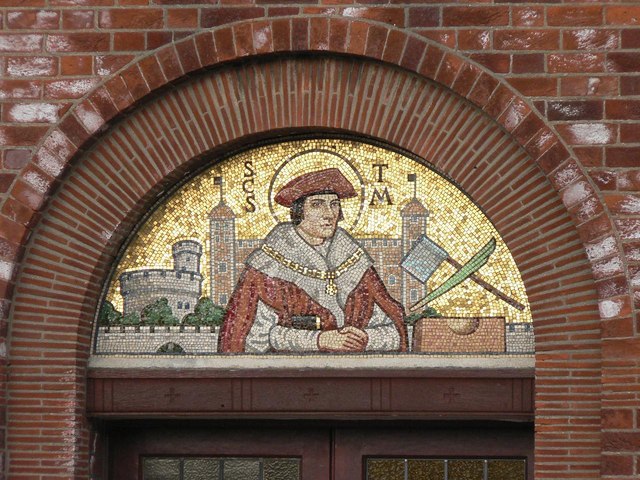
    Image Credit: Chris Downer / Iford: St. Thomas More – doorway detail

    Listen to the Full Interview here

    Julie has been homeschooling for twenty years. Five of her children have finished, and she now homeschools four; age seven, twelve, fourteen, and seventeen.

    Julie speaks about how, when her eldest was four or five, he had already started learning at home with his two younger siblings, and she wanted to continue that. “I just didn’t like the idea of us sending him away to school for six hours a day to get an education. I thought, ‘we already have the perfect environment for education at home, with the people who love him the best.’” At home, she could educate how she wanted, and choose the curricula best for her children.

    In school, children are away from home for a large part of the day. However, through homeschooling, “we could take our time at home, reading a lot of books, going on excursions, just spending great times together with my husband and the children, out in nature, learning about the Catholic Faith.”

    Julie says, “If we make God first in our hearts, then that’s the basis for trying to pass the Faith on to your children.” God uses the Faith of the parents to instill the Faith in the children. Julie talks about “bringing it into daily life with daily prayer with the children, with Mass and the sacraments, with reading the lives of the saints…helping children realize there’s a great of witnesses around them, that the Saints are watching them and helping them…my husband has been especially really good at passing on knowledge in the area of apologetics.”

    Now, Julie’s children are involved in the wider Catholic community, serving the Parish by helping run youth groups and Sacramental programs. Julie and her husband, Dean “tried to immerse them in the Church life, because we ourselves feel immersed in the Church life, and somehow the Holy Spirit has just used that and worked in their lives…the Church has served us and I guess they feel like they would like to serve the Church.”

    Julie speaks about how the writing of the Saints “really inspired me in homeschooling and in family life.” She mentions a book called Story of a Family, by Fr. Piat, a book about St Therese’s family, which “just showed me how much they [Louis and Zelie Martin] loved their children, and how they wanted to bring them up close to the Lord.” The Martin parents were careful about their children’s education. Julie “gained strength from Zelie’s writings…I knew I wanted to have a family life like that.”

    Julie was also influenced by a book called Born for Friendship: the Spirit of Sir Thomas More, by Bernard Basset. She says, “his children learned at home. He had tutors for his children. And he probably would have liked to teach them himself, but he was often away on business.” St Thomas advised his children’s tutor, “warn my children to beware of pride and haughtiness, and rather to walk in the pleasant meadows of modesty, to put virtue in the first place, learning in the second, and in their studies to esteem most whatever may teach them piety towards God, charity to all, and Christian humility in themselves.” Julie says, “that’s what I really want for our family.” For St Thomas “learning was to cultivate the soul” and he had a very peaceful, Faith-filled atmosphere in his home, which Julie tries to cultivate in her own home.

    Some other resources Julie has used are MODG, Seton, Formed, and a book called A Charlotte Mason Companion, by Karen Andreola. Julie says, “I think it’s really good to try and glean the wisdom of the people from long ago”

    Julie says, “we’ve always liked the children to stay active, because we think that’s important for health, and Dean and I were quite sporty when we were younger, so the children usually play a winter sport, but we definitely don’t like to overdo it or have it overrunning our family life…you’ve got to decide how much you’re going to do of it because it’s always trying to drag you in to do more and more.” She says, “a few of our children especially..have gone on to excel in some of those areas and homeschooling’s been really useful for that.” It gives them flexibility to train when they want to, whether it is in the morning before study, or later in the day. It also prompts them to take initiative. She mentions that having two older brothers to play with really helped her daughter excel in basketball.

    The Mischewskis have also done acting and drama. They were involved in a drama group. When the eldest four kids were four, six, eight, and ten, they loved Narnia, and spent hours practising and acting out the The Lion the Witch and the Wardrobe. Now, some of the children are involved in a choir.

    Julie says, “I’ve never really been too worried about socialization…there’s so many things you could do, especially in Canterbury, that you could be doing something every day, all day, extracurricular, and that you just won’t get your schoolwork done.” They choose several things per term, such as swimming lessons, choir, public speaking group, and Christian family meetups. Julie says “the greatest socialization is going on in your family, in your domestic Church, because you’re there for the sanctification of each other.”

    Julie mentions that Laura Ingals Wilder was “isolated for months on end, and I don’t think you could say that Laura Ingals Wilder wasn’t well-socialized” The Mischewskis have had opportunities to socialize with school children through sport, but “socializing with different age levels” is also important, and the kids often get to do this when they have adults over for dinner, who the kids might not know.

    Homeschooling can be exhausting sometimes, especially when you have lots of kids under age ten, and are waking up in the night to feed the baby. Julie also says, “I’ve got the benefit now of looking back, and seeing how the children…managed to get to adulthood okay,” something she didn’t have when her eldest was five and she first started homeschooling. “You doubt yourself,” she says, “even today…I feel like I’m not doing enough academically.” Sometimes it can be tricky to homeschool when you have toddlers; “I love them so much, but they make homeschooling really hard, they want to join in, and get up on the table…For us it was always important that every child was happy…sometimes [this meant] we would just have to stop work and go down to the park.”

    Some of the highlights of homeschooling for Julie were “seeing our children just become each others best friends, enjoying the close family bond that we’ve had, seeing our children care for each other, love each other, become each other’s best friends, getting on well together, having happy family life…seeing the children’s Faith grow…seeing that they have Faith, meaning, joy, hope, security love…and I think homeschooling has helped that.” She also mentions, “spending lots of great times together doing things, [homeschooling] gives you a lot of freedom to do things…you don’t have to stick to school terms if you don’t want to, you can go on trips if you want to.” While homeschooling, she is “learning with the children. Books that I didn’t read when I was a girl, things that I didn’t learn, my kids are teaching me now.” Together, they read aloud, stories about the Saints and great literature.

    Julie’s advice is, “as homeschooling parents you’ve got to realize that you’re in it for the long haul, and so you don’t want to burn out early on…You’ve got to look after yourself, you’ve got to look after your spouse. You want to have a strong relationship with your husband, so your children see that and they can gain security from that…Work together as a team, you and your husband.” As a mum, you should “keep replenishing your soul with good things from God” Spend time in prayer daily, grow in your Faith and grow intellectually, pursue your hobbies. Julie tries to read every day, often scripture. She says, “decide to love your vocation as a wife and a mum…realize that the joy of the Lord is our strength…It does get easier as you go on, and you look back and you see that the children have come through okay.”

    Listen to the Interview

  • Why Homeschool – Marion O’Halloran

    Why Homeschool – Marion O’Halloran

    Written by Marion O’Halloran

    Article and image used with the kind permission of Family Life International, Australia. Original source: FLI homeschooling, FLI website.

    Marion O’Halloran has been married to Brady for 19 years, has 6 children and has been Homeschooling for 14 years. Her father, Bernard Sadler, was one of the founding members of what is now Family Life International, Australia.

    I never intended to homeschool. As a young single woman, I thought for sure that I would be sending my then-theoretical children to school. I was sent first to a Catholic Primary School and then to a private girls’ school. I have mixed feelings about both of those experiences but I never once questioned the “rightness” of sending children into an institution outside the family home to gain an education. At least, I never questioned it until my children were no longer theoretical.

    Becoming a parent for the first time made me take seriously everything that had previously been merely theoretical, but also to take seriously all the things I wanted my children to inherit from me, and in particular, my Faith. The situation with regards to teaching children the Catholic Faith was pretty dire when I was at school in the 80s and early 90s, but now it was that same generation that would now be teaching MY children. My own faith education, being what it was, was objectively far more advanced than so many of my peers, but I was only just beginning to discover just how lacking it really was despite that. I couldn’t in good conscience send my children into a system which had failed so many in their faith development, including my own. So I decided to homeschool. My primary motivation was my Faith and how I wanted it to be taught to my children.

    I say “I” because the bulk of the decision and the bulk of the work involved in this naturally fell to me. My husband was and is very supportive but I was the one who would be at home with the children while my husband went out to work. I think it is important to acknowledge that, by and large, it is the mother of the household who will school the children. But rather than see this as an extra burden, I would like, rather, to paint this as a natural extension of our primary role as mothers. We who helped teach our children to sit up, feed themselves, wash themselves, brush their teeth, walk and talk, now teach our children to read and write and think critically. Why should we think that we aren’t able to provide our own children with an education? We who knew them from the earliest moments of their existence, who know them and love them better than anyone other than God? I would suggest that if our own schooling made us unfit to teach our own children, then the education we received was indeed sorely lacking, but why on earth would we then send our own children into it to be similarly poorly educated?

    So I started. I kept telling myself it would just be for that year and then we would see how we went. I kept saying that to people who questioned me as to whether I would send my kids to school too – it kept them off my back. I started to teach my child in the same way that I had been taught: I sat her at the table with a book in front of her, allocated a certain time to each subject and thought that was how it would be, nay SHOULD be. Let me now tell you that homeschooling your children will be every bit YOUR education as theirs – but such a rewarding one. That was when I discovered that this idea of putting our children into a room with 30 other children of the same age to learn about a certain subject in isolation from everything else, in a set period of time, outside of both their interest or any relevance to them, was not actually educating them. Sure, they were being schooled, but not educated. I am so thankful that I didn’t persist in that model but learned that homeschooling is best seen as fitting in naturally with the ebb and flow of family life.

    Before I knew it I was 13 years in and with 5 more children and now with the very real possibility of homeschooling for another 15 years, God willing. Apart from a few hiccups along the way, some more serious than others, I have only been glad of the choice that we made. The benefits of homeschooling are many. Our children are good friends with each other. Sure, they fight and bicker like any siblings do, but the strong familial ties that are created with the help of homeschooling are an anomaly in today’s society. Our children are excellent autodidacts: I can’t tell you how much I have learned from my younger son on birdlife and marine animal life alone! Two subjects I previously thought were dead boring were brought to life by my son. I often say that I have now received an excellent primary school education after homeschooling my own children. We are learning together. Our children are able to pursue their own interests and passions without the constraint of the 40 minute block of the classroom. They are able to learn about their passion and without reference to a timetable or a test. I can show the world to them in a safe and loving environment without the bullying or the progressive political agendas that permeate so much of our society and educational institutions today. They are learning to love learning. We have beautiful friendships with other like-minded homeschooling families and we have been able to create a community they thrive in.

    I’m not going to pretend to have all the answers. We’re still raising our children and have only just gained an adult child this year. I don’t know what the future holds. I don’t know how this journey will turn out. The world can be so ugly but I believe that by homeschooling our children, my husband and I have been able to give our children a beautiful childhood and a firm foundation in our Faith.

    Article Originally Published:

    O’Halloran, Marion, “Why Homeschool,” FLI Homeschooling, Family Life International website, Australia.

  • “Faith lived out in Action” – Ruth Green

    “Faith lived out in Action” – Ruth Green

    Image Credit: I, Luca Galuzzi, CC BY-SA 2.5 https://creativecommons.org/licenses/by-sa/2.5, via Wikimedia Commons

    Watch The Interview

    Ruth has been homeschooling for fourteen years, and talks about why she decided to homeschool. When she got married, she and her husband, Matt, liked the idea of homeschooling, but didn’t know a lot about it, as both had attended school. Ruth says when Sarah, their eldest, was ready for school, “I doubted myself. I doubted that I had the capability or the capacity to homeschool.” Sarah went to school for a year and a bit, and “unfortunately she had a pretty rough experience with school and was very miserable. And after she’d been there for about a year and a bit we thought….we need to do something.” They looked into private schools, but these tended to be expensive, and they looked into schools focusing on alternative methods, but decided against these because they wanted a Faith-based education for their children. Then, Ruth explored homeschooling through reading books and talking to people.

    When the Christchurch earthquake hit, the Green family had to move house because of earthquake damage, and so were away from school for a month. Ruth reflects, “I really think God used the earthquakes to kind of throw us into something that we needed to do as a family and didn’t have the courage to, step out of the boat, as an analogy, and he provided the means in that sense, and also gave us the chance to say to our families, that weren’t very keen, that we were just doing it because of the earthquakes…here we are fourteen years later, never looking back really.”

    Reflecting on her decision to homeschool, Ruth says, “I didn’t think that I had an education that was high enough…to teach my children…and I failed to realize that we all, as parents, are equipped with everything we need to educate our children – that God has made us that way, and that I needed to trust that he would provide, not only the means, in terms of community and resources, but he would give me the graces to do it as well. And they are your children – they are uniquely yours – and you are given to them and they are given to you. There is that beauty in that relationship, which education then comes from. Because you’re teaching them to talk and to love and to serve, and to do all those things right from the minute they are born.” Education continues that. Ruth advises other homeschoolers, “Have Faith in yourself and trust that God is going to be with you on the journey, and just take it…step by step.”

    Ruth says that through homeschooling her children, “I have seen every stage of their development as a person…emotional development…spiritual development…I get to see them, and I get to be a part of that.” Mary pondered in her heart, as she saw Jesus grow up in Nazareth. A homeschooling mum sees and ponders on her children, as she sees them grow up in the home. Ruth says “my absolute favourite thing about homeschooling is the relationship we build with them [the children], but they also build with each other.”

    In the home, the family experiences “Faith lived out in action.” There are nine children in the Green family. Every time the family has welcomed a baby, the children’s “hearts have had to open to allow room for another person, just like as parents, your heart expand and that love grows.” There are many opportunities to live out what you learn in the Catechism. In homeschooling, “every day you’re serving. Every day you’re having to be patient and make space for someone else and wait your turn…in an environment which really fosters that love…in the homeschooling environment, in a large family, you have to…learn to give of yourself.”

    Ruth shares how, at the moment, her youngest children are a two-year-old and a three-year-old. Her three-year-old needs quite a lot of attention. Once, when this was challenging, Ruth “said in exasperation, ‘oh my goodness, maybe we send him to preschool, guys, so that I’ve got more time for you,’ and they looked at me with such horror on their faces like I had said a dirty word. They were like ‘mum we cannot send him away. That is not what we do…We love him and we’ll figure it out and work it out and do this as a team.’”

    When she first started homeschooling, Ruth was very excited about all the available extracurriculars, “and I think we realized very quickly, you burn out very quickly.” If you do too many extracurriculars, “there’s no time for your main subjects, your main academics at home. But I also found there’s no peace at home when everyone’s stressed out about trying to find shoes to go out the door…so we just pray and discern and look at what it is that is most needed at the time.” They are currently doing swimming, a teens group, and fortnightly Catholic homeschool meetup – Ruth says they are doing “less things this term because we needed a quieter term.” It is important to have “wisdom… [to] know what is going to be doable.” Ruth says if they do to much one term, “we have to take a step back the next term and be a bit quieter.” For example, sometimes you may have a newborn baby and stay at home more. Last year, Ruth’s eldest, Sarah, got married, and they were busy preparing for the wedding. Ruth says, “there is a time and a season when you can be very busy, and very out, and very social, and then there are times when you need to be very quiet, and I actually treasure those times when we’ve had very quiet family life, because the relationships definitely get deeper.”

    In terms of resources, Ruth uses many different ones, focusing on each child’s interests. For example, she uses Twinkl, where she has sometimes found Catholic resources, for example, for celebrating Lent. She frequently focuses on a topic, using online resources, and going on educational outings. Ruth says, “instead of using a set curriculum, I pulled from many, many resources.” This can be great for kids who find book-work challenging, as it helps them to learn through projects; Ruth talks about “using topic studies and learning that way.”

    When asked about her favourite thing about homeschooling, Ruth quotes Holly Pierlot’s “A Mother’s Rule of Life,” “We are called to bring God to our children’s spirits, truth to their minds, health to their bodies, skill to their hands, beauty and creativity to their hearts, and in all this, virtue to their wills, and sanctity to their souls.”

    Ruth says the hardest thing about homeschooling is, “trying not to get down on yourself…or comparing yourself to others, or comparing yourself to the school system…when life is busy, when everyone is tired, when no-one’s listening, those moments where you say, ‘am I doing the right thing’” and it is important to learn “to really lean into Our Lord and trust that actually we are doing the right thing.”

    Watch the Full Interview Here

  • Homeschooling is “a lot of fun”: Rebecca Loretz

    Homeschooling is “a lot of fun”: Rebecca Loretz

    Image Credit: Maddalena Ienco, CC BY-SA 4.0 https://creativecommons.org/licenses/by-sa/4.0, via Wikimedia Commons

    A mum of nine and grandmother of five, Rebecca Loretz has been homeschooling her youngest three children since November 2021. Originally, she didn’t plan to homeschool. Upon moving from Auckland to North Canterbury, she encountered a large community of Catholic homeschoolers. Lockdown and the vaccine mandates “pushed me into thinking, ‘I really want better for my children.’” She thought homeschooling “could be a lot of fun” and would allow her to “cater the education to my individual child.”

    Before having children, Rebecca was a primary school teacher. She compares homeschooling to the classroom; “while there are a lot more on-hand resources within the school, there’s not as much individual time.” When homeschooling, “you’ve got a real interest and a real emotional connection with this child – this child is your child, you want your child to succeed – and while I wanted all of my children in the classroom to succeed, the lack of time meant that it wasn’t always possible.” There are now many resources for homeschooling. Rebecca has used Twinkl, The Good and the Beautiful, and Homeschool Connections. She says “the biggest resource is your community,” and communities can be very helpful in finding online resources

    On the all-too-famous topic of socialization, and balancing social life with schoolwork, Rebecca said “I recognized that my children were not going to miss out socially.” Sometimes there will be times when you have more “outside-the-classroom education” or more time sitting down doing schoolwork.

    Rebecca said, “I see the religious formation and education of my children as the number one thing.” The Loretz family are close to the Beatitudes community, which helps to develop the children’s Faith through Mass most days, regular morning prayer, adoration, and vespers. They also participate in Little Flowers group and Lectio Divina, and sing in the choir.

    After prayers, the first thing in the school day is piano practise. With multiple pianos at their house, as well as a clarinet and lots of singing, the Loretz family are “surrounded by music.” Rebecca notes that homeschooling isn’t limited to school hours – Tecorians, the public speaking group they are involved in, is in the evening, and “I do see that as part of the kids’ education”

    Another educational aspect of the Loretze’s life is their lifestyle block, which gives them “a lot of opportunity for fixing thing, for looking after animals…our recent endeavour has been milking the cow.” Rebecca speaks about “the joy in being able to plant something and then eat it – or plant something, see it grow, and then go, ‘I hate that. I don’t like eating beetroot, but I’m glad you like it mum. I’ve grown it for you.’” They enjoy living close to the beach, with many lovely walks nearby.

    Her advice to every homeschooling mum is “your community is important,” and “keep going, even when it gets a little bit hard.” She emphasizes the importance of enjoying it, mentioning that, “you won’t keep doing it if you don’t enjoy it. The kids have to enjoy what they’re doing too.”

  • “Watching my children learn” Deborah Marambos

    “Watching my children learn” Deborah Marambos

    A mother of ten, Deborah Marambos has been homeschooling for fourteen years. She talks about how, coming from South Africa, she lived in England and struggled through the “dark and cold” English winters. She “couldn’t get my head around the idea of sending my four year old to school where they were going to spend most of their daylight hours in the winter behind a desk” At a similar time, she stumbled across a book on homeschooling by Kimberley Hahn, and “I was very interested to know why Kimberley Hahn had decided to homeschool, because I’d read a lot of her husband’s books, and I kind of saw them as model Catholic parents.” Deborah was “just amazed at the possibilities of homeschooling, what you could do as a homeschooler…the vision sort of gripped my imagination and I started to pray about it.” She also met homeschool families and was “very impressed with their children, specially their teenagers, they were particularly social and very kind, close with their siblings, and they were very good at holding a conversation with an adult they didn’t really know.”

    In response to the all-too-familiar socialization question, Deborah replies, “well, there are twelve of us in our house and socialization’s not really a problem.” She mentions her children have opportunities to socialize; they see people at sports, and Church, and also know other homeschoolers. It is important that “the kids spend time amongst adults, older siblings, so they can learn how to talk across the generations and talk to people with different interests to themselves.”

    She says balancing social time, family time, and schoolwork can be “quite difficult at times.” Life changes; you’ll have to do things differently when you have a new baby, or you might do more extracurricular things when you have teenagers. She says “we’ve just had to have a routine that was quite fixed in some ways, and then in other ways quite flexible.” She “found the things that works the best for me is…to take it term by term,” planning one term at a time.

    A routine also helps to spread her time out between all the children. Sometimes one child might need a bit more help, or another child might be doing a lot of extracurricular activities and need less attention. Deborah notes, “I’ve had a lot of help from my older children looking after younger ones.” Sometimes she has had people coming in to help with cleaning, cooking, and housework.

    About learning difficulties and health problems, she says “that’s been really challenging and its not something I foresaw when I decided to homeschool. I’ve learned a lot. I didn’t know much about some of the health problems we’ve had and I didn’t know much about specific learning disabilities.” She found it helpful that there were other moms out there who knew more about these things, and organizations and computer programs to help. She says, “sometimes you have expectations that you have to do so much…or your child has to do a certain amount, and if they’re struggling with a chronic health problem you have to be able to adjust that, you have to pray a lot.”

    Deborah used curricula and online classes from Mother of Divine Grace School, an American distance school, “to educate our kids in ways that I couldn’t.” She loves homeschooling because it has “given [the children] time to explore some of their own interests” and “they’re able to just be themselves.” She uses a “lot of books, a lot of Catholic books have helped me to learn along with my kids, ever since they were little…we’d try make it an effort every day to read some kind of Catholic book, Saints book, or the Bible.” She’s also used resources from Catholic websites to help bring the Faith into daily life, as well as Formed (Formed | On-Demand Catholic Movies, Audio Books, Podcasts & More), Augustine Institute (Augustine Institute | Catholic Educational Apostolate & Theology Graduate School ), podcasts, CDs, and “Mother of Divine Grace has got a great religion program which I think has helped to form the kids, and me as well.”

    She finishes with these reflections:

    “One of my favorite things about homeschooling is watching my children learn, especially those kids who have struggled, to see them actually achieving goals where they’ve had to put in a lot of effort [and] having everyone together…I appreciate that time, because it goes very quickly. One of the hardest thing about homeschooling is that as a mom you always feel like you’re never good enough, and its really hard to sort of overcome that, and just trust that its enough, that you teaching your kids, that’s enough, that God is using you, and that he’s happy with that, and it’s enough for your kids. You know, it might not be the greatest education, or it might not be the most creative or as good as you’d like it to be, but it’s good enough.”

    Her advice to every homeschooling mom is: “Pray and persevere. Don’t give up.”