Category: Resources

Activities homeschoolers are doing, resources, etc.

  • How to Fit More Into Your Day

    How to Fit More Into Your Day

    Image: Santeri Viinamäki, CC BY-SA 4.0 <https://creativecommons.org/licenses/by-sa/4.0>, via Wikimedia Commons

    Thoughts from a homeschool alumna

    As somebody who enjoys making lists and timetables to see how much I can physically squeeze into the day, I appreciated that homeschooling allowed me to organize my day in the way I liked. However, it often wasn’t quite the way I liked, because of loud siblings, maths lessons that took longer than I’d anticipated, and the simple fact that, for some reason which I can never quite understand, not everybody else in the family was as enthusiastic as I was about rigid routines that specified what to do with every single minute of the day. 

    There is a lot of time-management advice out there, such as

    • getting up early
    • doing the hardest thing first
    • taking breaks during study so as not to burn out
    • focusing on your goal
    • eliminating distractions (cell phone out of the room) 
    • maintaining a good sleep schedule
    • planning your day
    • knowing when you are most productive and studying then

    All of this is very good and very helpful. Sometimes it is very practical, but you can’t do your hardest subject first when you can’t do your algebra test until your sister finishes with the computer, and you can’t eliminate the distraction of a three-year-old singing Thomas the Tank Engine theme song at the top of his voice and out of tune. 

    I found it helpful to set practical, precise goals and stick to them. For example, perhaps you cannot eliminate all distractions, but you can still switch your devices off while you do your algebra sums, so you are not tempted to watch You Tube. Perhaps you cannot maintain a good sleep schedule because you have insomnia, but you can still take study breaks. Perhaps you cannot do the hardest thing first, but you can still make a rule to do at least one subject before 9am.

    Yet no matter how disorganized your day may be, start and end every day with a prayer. That way, even if you accidentally study the wrong topic for the test, if you do not study because you have a tummy bug, or if you get every single one of those algebra sums wrong, your day is entrusted to God. 

    Ultimately, the goal of life is sanctity, not productivity, and so if, for example, a mother does nothing on her to-do list at all because she is caring for sick children, she is doing something very good and admirable. There is more to life than getting impressive things done.

    St John Bosco said, “Daily work, regularly and conscientiously performed, was a sure stepping stone to sanctity.” Thus, even the most unimportant, menial task can actually become a step on the road to Heaven. 

    AMDG – Ad Maiorem Dei Gloriam – All to the greater glory of God

  • Activ8 Youth Camp

    The Activ8 Youth Camp is an opportunity for people age 16-25 to learn about defending a culture of life. There are talks covering all things pro-life, from apologetics and activism to the science of life in the womb and the current legal status of abortion in New Zealand. They also have small group discussions and fun activities.

    As well as being a great educational experience, it is also a good opportunity to connect with like-minded people and enjoy doing something different.

    Some testimony from past attendees:

    “ACTIV8 Pro-Life Youth Camp has been an incredible experience.” – Natalie

    “I have come away more informed and grateful…everyone should attend.” -Malachi

    “ACTIV8 Pro-Life Youth Camp was so awesome! I learned so much, and I feel inspired to defend the vulnerable. Thank you!” -Keren

    The camp is July 14-17. There are some sponsorships available if cost is an issue. The main Activ8 Camp (open to all 18+) is also coming up soon. Contact the Activ8 team with any questions.

  • OCH Got Talent 2026

    OCH Got Talent 2026

    Super excited to announce OCH Got Talent 2026! Whether it be singing, painting, baking, or even something rare and random like wooden toy gun making, we cannot wait to see your talent. Open to all Catholic homeschoolers in Oceania.

    View last year’s OCH Got Talent here for inspiration!

    Rules:

    • I want all the videos to be suitable for viewing by the whole family, including young children. Thus, content containing swearing, violence, mention of drugs or alcoholism, and anything that might be disturbing for young viewers may be disqualified at the judges’ discretion. Please reach out if you aren’t sure; I really don’t want anyone to be disqualified but it is super important that the whole family can watch these.

    • Feel free to send in multiple entries if you like; the judges will pick the best one for the contest.

    • Videos can’t be longer than five minutes

    • Don’t plagiarize. If you borrow other people’s work, please reference it.

    • The deadline is July 31st at 11.59pm

    • The judges’ decisions are final.

    Entering:

    Please can parents email me images or videos via OceaniaCatholicHomeschooler@gmail.com. This is so I can verify you are fine with me posting them to the newsletter. Please let me know:

    • Whether you would like the photos/videos to only be sent to those on the mailing list, or if you are fine with me posting them on the internet.

    • The name and age of the child in the photo/video.

    • Whether you are in NZ or Australia. Please email OceaniaCatholicHomeschooler@gmail.com if you have any questions.

    Publishing:

    Videos/photos will be emailed to the mailing list, and those with publishing consent may be posted to the website and social media.

  • Homeschooling in New Zealand under attack?

    Homeschooling in New Zealand under attack?

    Image: Tom Ackroyd, CC BY-SA 4.0 https://creativecommons.org/licenses/by-sa/4.0, via Wikimedia Commons

    By Nathan Walton and Anastasia Marambos

    New Zealand’s Minister of Education, Erica Stanford, in a press release on 18 May, revealed new, seemingly benign changes to “support the learning and wellbeing of students in homeschooling” by “establishing clearer requirements for home education, including regulatory conditions to maintain exemptions from school enrolment.” However, despite the apparent benignity of the Minister’s plans, these changes are not at all what they seem. Upon further investigation, it is clear that the changes are, in fact, no more than a Trojan horse for unjust State intrusion on homeschoolers and their families.

    The requirements include a new powers under section 38 of the Education and Training Act 2020 for the Ministry of Education to set regulations of any kind that it likes on homeschooling families, including new mandatory reporting and assessment requirements, as well as additional targeted and intrusive Education Review Office (ERO) reviews of homeschooling families.

    There is a gross lack of clarity on what the reporting and assessment requirements could look like, and one must keep in mind that compliance with these requirements is necessary for families to retain their homeschooling exemption. In other words, these changes open the door for the Ministry revoking homeschooling exemptions en masse for non-compliance. Yet, if the Ministry sets reporting requirements that are unreasonably burdensome (for example, monthly, weekly, or even daily reporting requirements, all of which would be within its power under these changes) – how could any family comply in the first place? Or, if the Ministry sets a particular assessment requirement, and a homeschooled child fails that assessment, would it mean the family loses their homeschooling exemption? That these are possible and even plausible scenarios under the proposed changes signals that the Minister’s proposals are ill-considered, poorly drafted, and deeply unjust.

    Shockingly, no consultation of homeschooling families or bodies like the National Council of Home Educators NZ has even taken place, as evidenced by a Regulatory Impact Statement from the Ministry of Education. The document states variously:

    “Due to time constraints, no consultation on this specific proposal has occurred with home educators, or their representative associations.” (p. 3).

    “We recognize that consultation with key groups is missing.” (p. 3).

    “There will be an administrative cost placed on home educating families to complete any specific regulatory requirements more regularly. The cost of this is unable to be quantified.” (p. 4).

    Due to the lack of consultation, the statement blithely anticipates possible “home education sector pushback: we have not engaged with the sector on this change.” (p. 5).

    Erica Stanford is right to anticipate pushback. A government should never impose such fundamental changes on any system without consulting those most affected, especially the education system, which is so integral to the wellbeing and development of children. Please urgently contact your local MP and every party’s education spokesperson from the list below (in order of importance) to oppose the proposed changes to home education in New Zealand. Let’s protect the future of homeschooling in New Zealand!

    Andy Foster (NZ First Party Education Spokesperson): andy.foster@parliament.govt.nz

    Laura McClure (ACT Party Education Spokesperson): laura.mcclure@parliament.govt.nz

    Ginny Andersen (Labour Party Education Spokesperson): ginny.andersen@parliament.govt.nz

    Erica Stanford (National Party Education Spokesperson): erica.stanford@parliament.govt.nz

    Lawrence Xu-Nan (Green Party Education Spokesperson): lawrence.xu-nan@parliament.govt.nz

    Hana-Rawhiti Maipi-Clarke (Māori Party Education Spokesperson): hana-rawhiti.maipi-clarke@parliament.govt.nz

  • The Angel Awaits Our Lady’s Reply

    The Angel Awaits Our Lady’s Reply

    Image Credit: Leo Chane, Unsplash


    At the Annunciation, Mary said yes to becoming the Mother of God. We can ask her to intercede for our families, and pray to her in all our struggles. Here is a profound reflection by St. Bernard of Clairvaux:

    You have heard, O Virgin, that you will conceive and bear a son; you have heard that it will not be by man but by the Holy Spirit. The angel awaits an answer; it is time for him to return to God who sent him. We too are waiting, O Lady, for your word of compassion; the sentence of condemnation weighs heavily upon us.

    The price of our salvation is offered to you. We shall be set free at once if you consent. In the eternal Word of God we all came to be, and behold, we die. In your brief response we are to be remade in order to be recalled to life.

    Tearful Adam with his sorrowing family begs this of you, O loving Virgin, in their exile from Paradise. Abraham begs it, David begs it. All the other holy patriarchs, your ancestors, ask it of you, as they dwell in the country of the shadow of death. This is what the whole earth waits for, prostrate at your feet. It is right in doing so, for on your word depends comfort for the wretched, ransom for the captive, freedom for the condemned, indeed, salvation for all the sons of Adam, the whole of your race.

    Answer quickly, O Virgin. Reply in haste to the angel, or rather through the angel to the Lord. Answer with a word, receive the Word of God. Speak your own word, conceive the divine Word. Breathe a passing word, embrace the eternal Word.

    Why do you delay, why are you afraid? Believe, give praise, and receive. Let humility be bold, let modesty be confident. This is no time for virginal simplicity to forget prudence. In this matter alone, O prudent Virgin, do not fear to be presumptuous. Though modest silence is pleasing, dutiful speech is now more necessary. Open your heart to faith, O blessed Virgin, your lips to praise, your womb to the Creator. See, the desired of all nations is at your door, knocking to enter. If he should pass by because of your delay, in sorrow you would begin to seek him afresh, the One whom your soul loves. Arise, hasten, open. Arise in faith, hasten in devotion, open in praise and thanksgiving. Behold the handmaid of the Lord, she says, be it done to me according to your word.

    -St Bernard of Clairvaux, Hom. 4:8-9.

    Here is a printable version:

  • “Books that have formed society” – Ben McCabe

    “Books that have formed society” – Ben McCabe

    Watch the full interview here

    Ben McCabe founded Augustine Academy in 2016, after completing his liberal arts degree, and while pursuing postgraduate studies. He wanted “to give back some of the education that’s been so formative to me.” Over the past 10 years, he has taught hundreds of students, from every state in Australia and even a couple of Kiwis.

    The core subjects are Theology, philosophy, history, and literature, which are taught along with public speaking, grammar, logic, rhetoric, drama, and agriculture. While some adventurous students come for the outdoor activities, others come for the classical education, and some are drawn to both. Around 85% of students are homeschoolers who want to continue to receive a classical education, and Augustine acts as “a stepping tone” between secondary and tertiary education. It is “a context that is wholesome, where their Faith will be supported and where they’ll be around peers that are like-minded.”

    Ben said classical education “absolutely” supports Faith formation. He explains, “It’s done nothing but strengthen my personal faith…witnessing the students that have come through Augustine academy, it seems to have matured them in their faith.” Ben says that “history supports that,” as “classical education helps the Faith, it also helps with keeping sanity amongst a world of chaos.”

    Classical education is heavily based on the classics – the great works of literature, which, throughout history, have acted as sources of truth and wisdom. Ben explains that a classical education is “aimed to make you a critical thinker.” He mentioned how propaganda was weaponized during WWI and II, and said that it seems that, today, “[modern] education has been weaponized to promote certain ideologies that I don’t frankly align with much at all.” A good education counteracts this, because “rather than using education as propaganda…the agenda of classical education is to make you a critical thinker. And regardless of your religious proclivity, that ought to be prized, valued and sought after.”

    What about people who can’t afford expensive classes? Ben replied, “The best education you possibly get does not cost more than a few dollars.” Great books are very affordable. He says that, although he has spent years at university, much of his learning, and most of his lecture material, comes from his leisure reading.

    For parents who want to give their kids a good education, he said, “the first step is they should get their child’s phone, if the child has a phone, and throw it in the bin, or better in the fireplace. Or just make sure it’s destroyed, there’s not a single molecule left of that device. And then once that’s gone, then make sure there’s really good books in your house…if you want to make a kid do something you want to make it as easy as possible. So if you’ve got steak and skittles both in the fridge, then the kid’s going to eat skittles most of the time, but if there’s no skittles and the kid’s still hungry then they might consider the steak.” Similarly, if the easy distraction of a device is not available, and there are “plenty of classics littered throughout your house” then children will be more likely to read the classics.

    Ben emphasizes the importance of getting away from devices in order to read, “you’re always going to choose the path of least resistance. If you’re bored and you want stimulation, you’ll go on your phone or your laptop, but if there’s a book, and nothing but the book, then perhaps you’re going to actually pick the book up….Aristotle defines education as teaching a person to love the right things, and to learn that actually Shakespeare has more to offer than Tiktok is a step in the right direction.”

    It’s also important to give know what developmental stage a child is at when you give them books. Likely, it would not be helpful to give an eight-year-old Geoffrey Chaucer to read; it would be better to introduce younger children to the Narnia Chronicles, Robert Lewis Stevenson, or Sir Walter Scott. Then, they can read Chaucer when they are older.

    Ben emphasizes the importance of good literature. As there is no point eating food which will not nourish your body, there is no point readings books which will not nourish your mind and soul. Rather, “only read stuff that is worth your attention and is going to challenge you and expand your capacity for critical thinking…tackle the books that have formed society and transformed society.”

    Ben’s study tip is to ask yourself, “when am I engaged maximally at the task at hand?” He mentioned that he and his wife get up at 4.30 or 5am to find time for prayer and study before their children are awake. He also recommends being aware of what your attention span is; when it ends, it is time to have a break. Do something “Completely and utterly different” in your break. If you’re studying on your laptop, don’t watch You Tube during your break. Rather, go outside and do physical activity. Pay attention to when you are most alert; usually, that is the morning.

    A motivational technique is measuring your attention span; it will be very rewarding when it increases. Or measure how much you can write before becoming distracted. Ben says, “Motivation’s a massive component of high performance with your studies. You can’t feel motivated unless you see progress. You can’t see progress unless you’ve got markers.”

    Watch the Interview

  • What is a Good Year?

    What is a Good Year?

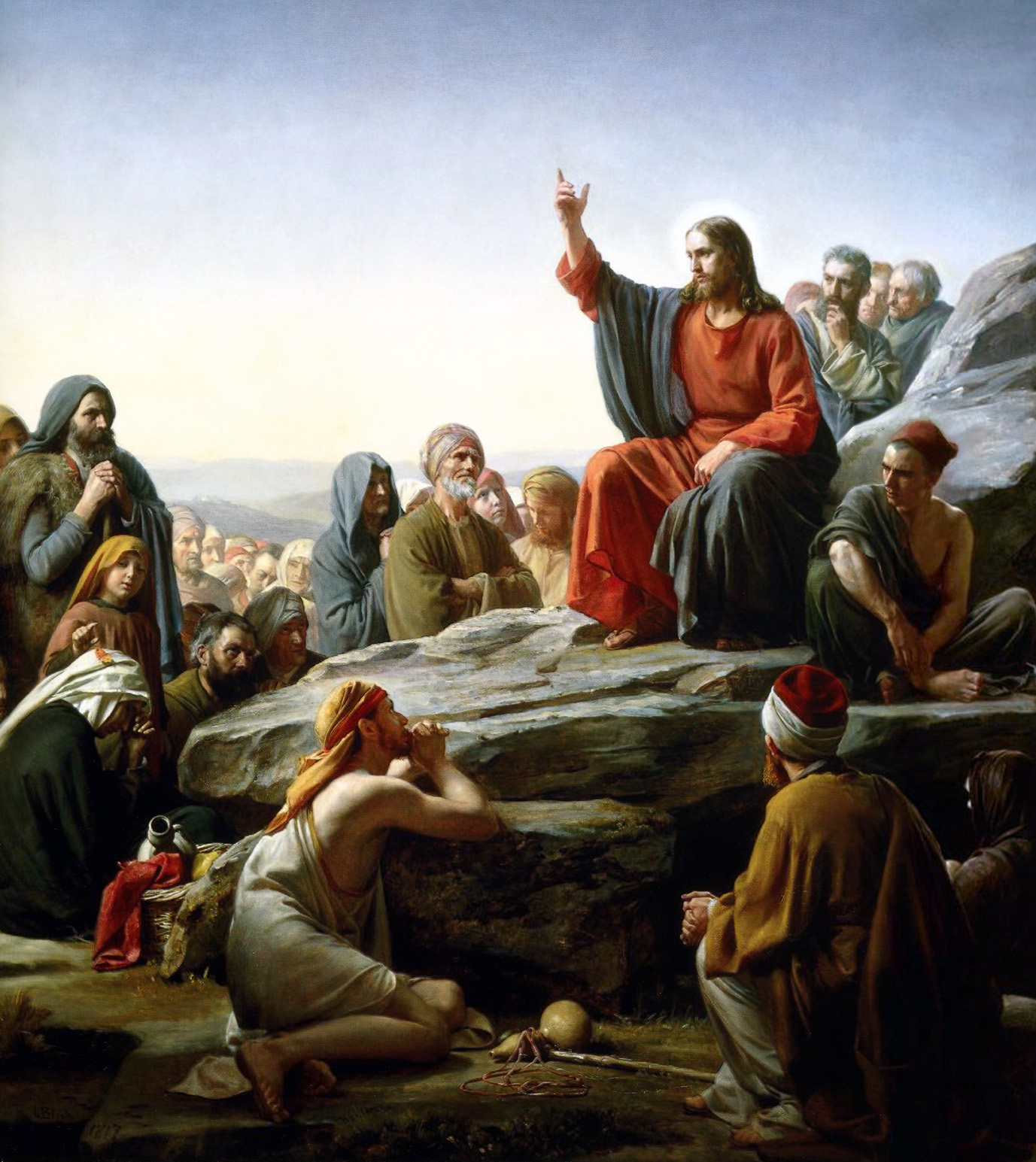
    Image: Carl Bloch, Public domain, via Wikimedia Commons

    By Nathan Walton and Anastasia Marambos

    What is a good year? Is it, as our modern society would maintain, defined by the pursuit of material benefits (whether wealth, power, or pleasure) and the utmost avoidance of pain and suffering? Or are these mere vanities, and “a striving after wind”? (Eccl 1:17). Is the good year, perhaps, defined by something more enduring, something altogether greater and nobler?

    For a Christian, as a follower and servant of Christ, a good year – and, indeed, a good life – is measured by the extent to which one participates in the good; the highest and ultimate good, He Who is Goodness itself, is God our Lord and Creator, as we learn from St Augustine. And the King in His infinite and benevolent wisdom has devised for us a Divine Law, which He promulgated for our sake. As part of this law we have received, we are told in the Gospel of Matthew that “Blessed are the merciful, for they shall obtain mercy” (Mt 5:7).

    Of all the many places in which humans show mercy, the family home is unique. In the Christian family home, day after day, time after time, seventy times seven, we love, forgive, and provide. Parents are constantly being called upon to feed the hungry and give drink to the thirsty; as they raise their children, they instruct the ignorant, counsel the doubtful, bear wrongs patiently, and forgive all injuries. Together, the family prays for the living and the dead. The very vocation of parents is a vocation of love and mercy.

    It is easy to be selfish in an office; it is easy to be impatient in a traffic jam; it is easy to be irresponsible at a party. Is it just as easy to be selfish, impatient, or irresponsible while attending to the needs of the crying child in the darkness of the night?

    The family is a fruitful field for works of mercy; it is also the teaching ground for mercy. For, before a child learns to speak, he has heard his parents pray for the living and the dead; Almost before a child opens his eyes, he has been the hungry being fed; a few years later, he might help to feed a younger sibling. Indeed, the merciful God Who died on the Cross for sinners, was born into a family, lived in a family, and sanctified the family. No other institution can boast that God blessed it like this.

    As 2025 ends, ask not “how much work have I done?” nor “how much success have I enjoyed?” nor “how much work can I do and how successful can I be in 2026?”; rather, slowly read Matthew 5. For the family which has prayed together, forgiven each other, and come closer to God this year, I say unhesitatingly that 2025 has been a very good year indeed.

  • “A Search for the Truth”- Fr. Philip, CSJ

    “A Search for the Truth”- Fr. Philip, CSJ

    Fr. Philip is a priest from the Community of St John, and among the brothers assigned to the Holy Family Parish, Christchurch West. Despite an extremely busy schedule, the brothers make time for daily study, which is an important part of their vocation. Fr. Philip shares his love of study, and explains why it cultivates a relationship with God.

    Christ said, “I am the way, and the truth, and the life;” (John 14:6) This is why intellectual formation is such a vital aspect of Brothers of St. John’s charism; Fr. Philip explains, “we have a robust search for the truth, and a search for the truth is ultimately a search for God.” The purpose of study is “to conform our minds and our hearts with the truth.” Study is one of the four pillars of their order, along with prayer, apostolic mission, and fraternal life.

    This “fervent and robust search for the truth…implies a philosophy,” and this philosophy “would be really seeking out who the human person is, the big questions of life, and grounding that in a realistic view of the person and reality.” This is why Aristotle and Aquinas are so excellent. “A good philosophy helps us to a good and precise and robust Theology; and Theology helps us to contemplate God.”

    Fr Philip explains that while philosophy and theology “will nourish our prayer life, the life of study also has implications for the apostolic life; we are able to give what we’ve contemplated, and we hope that it also nourishes our fraternal life in which we search together and grow together as brothers.”

    Asked whether this was important for the laity, Fr. Philip replied, “100 percent. Those four pillars are human pillars. It’s for everybody. We’re made for community. Everyone is called to prayer. Every Christian is called to be an evangelizer, to use their gifts and talents to build the kingdom of God. Every human is meant to develop and grow into virtue, especially those highest virtues which have to do with the mind and the heart. Intelligence is made for truth, so that is something to realize that potential of the mind, and that’s what virtue is, realizing the potential of the mind to attain truth. In that sense too, everybody’s got a unique path in their intellectual life and their life of study, it’s going to be very individual, but there are ways that are better than others insofar as they help us to stay grounded, using our reason in ways that are aligned with holiness, virtue, friendship.”

    I asked Fr. Philip if he had any book or resource recommendations, specifically for busy parents with five minutes at the end of the day. He quoted St. Paul, “whatever is true, whatever is honorable, whatever is just, whatever is pure, whatever is lovely, whatever is gracious, if there is any excellence, if there is anything worthy of praise, think about these things.” (Philippians 4:8) and explained, “what you fill your mind with, where your heart is going, that is what is going to influence, condition and ultimately make you who you are. So you want to pursue truth and goodness and excellence.”

    There is a lot of published work out there; on the one hand, there is “anti-truth, anti-goodness, gossip, sin, fake news, et cetera”; then, there are things that might not necessarily be false, but tend to be merely informative, rather than formative. One step up, there are resources that present truth; these are “the line of goodness truth, beauty, excellence”. Finally, there is “one step further, drinking straight from the source, and that you will never waste your time on,” for example, Catechism, Contemplative Prayer, Scripture, and the Sacraments, and works of mercy; in these, one is “receiving right from the source of grace.”

    Fr. Philip explained that “the mind is made for truth, the heart is made for goodness.” These sources nourish the mind and the heart. He uses the analogy of a river. One might struggle to jump straight into reading the Catechism for hours, especially if one is not used to that level of reading. Instead, one can find other sources that are still truth-filled, but perhaps easier to read; these are like streams, which lead into rivers, which “lead to the great ocean of God and his love and his mercy.”

    He recommends authors such as Fr. Jacques Philippe, George McDonald, C. S. Lewis, and J.R.R. Tolkien. He also stresses the importance of Lectio Divina, “the prayerful reading of scripture,” even if only for a few minutes a day, as well as podcasts, such as Bible in a Year.

    If parents love the sources of goodness, truth, and beauty, “that will then naturally pass on to the kids”; Fr. Philip recommends that parents, “keep honing your experience and knowledge to make it relevant to the children at whatever age or developmental level they’re at…it’ll be for the parent to see what will help most connect with their kids, and I think it’s important for the parents to enjoy, to have fun with it, and to learn as they go.”

    Children especially learn through “good literature that nourishes the imagination;” Fr. Philip emphasizes “the importance of story, fantasy, and imagination…it is especially crucial in our age that the children are receiving a good formation, and stories are very powerful. That is how God has made the human mind to receive truth.”

  • Catechesis of the Good Shepherd

    Catechesis of the Good Shepherd

    Katherine talks about Catechesis of the Good Shepherd sessions.

    Tell me a bit about your experience with Catechesis of the Good Shepherd.

    I was living in Sydney. I was a nanny at the time, and became interested in Montessori because the child I was looking after went to a Montessori Preschool. A mum I knew from church was a catechist, and when she heard I was interested in Montessori she told me about Catechesis of the Good Shepherd and invited me to observe a session. So nine years ago, I went along, and I was really taken by the peacefulness of the environment, the very natural materials, the independence of the children and just the respect that was shown to these young children. Two weeks later I signed up for a catechists’ course and started training.

    What ages is Catechesis of the Good Shepherd for?

    Level 1 is for ages 3-6, level 2 is for ages 6-9, and level 3 is for ages 9 to 12. The kids move up when they’re ready, and there’s a bit of flexibility.

    What’s different about Catechesis of the Good Shepherd?

    The Montessori method, which underpins Catechesis of the Good Shepherd, is a teaching and learning style. Catechesis of the Good Shepherd is based on the Montessori understanding of the developmental stages of children and their needs, and uses a lot of physical and natural materials.

    Catechesis of the Good Shepherd is really about facilitating an environment where a child can build their relationship with Christ. We’re supporting the family, not trying to teach every aspect of the faith.

    What does a typical session look like?

    The children come for a two hour session every week during the school term.

    The children arrive, and we usually begin by presenting a new work to groups of children, or one on one depending on their need and developmental stage. Some children may go and choose their own work and be presented to later in the session. We don’t use the term play in a Montessori environment, we talk about work. Majority of the time is then spent by the children choosing their own works from the works they’ve been presented. At the end of the session we come together for a short time of communal prayer.

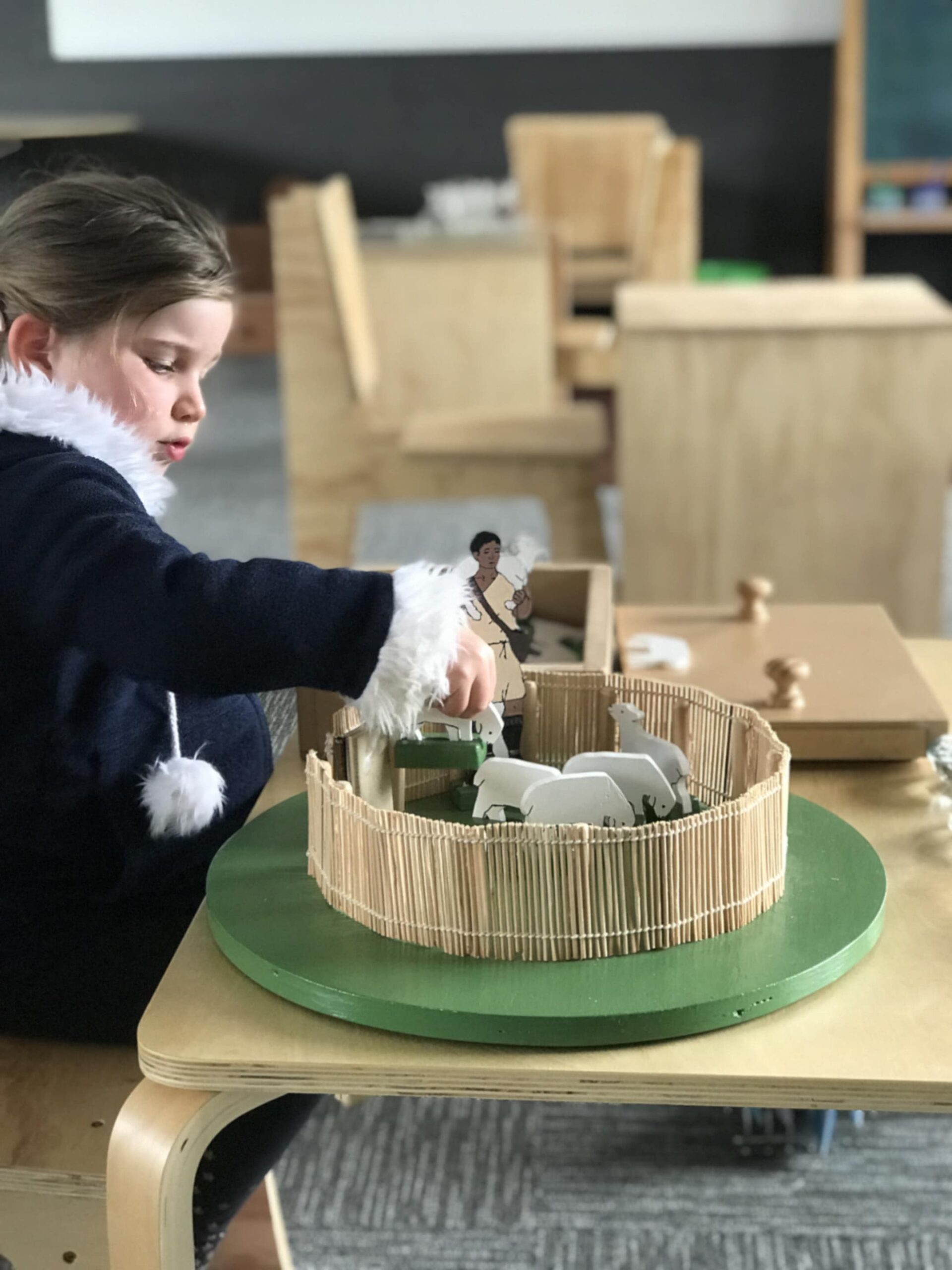
    An example of a scripture work is the parable of the Good Shepherd. When we present from the Bible, we don’t change the language, we read it as it is and then act out the parable with a little wooden shepherd, wooden sheep, and little wooden sheepfold. We then break open the scripture using pondering questions. If the children don’t respond we don’t give them all the answers. We ponder it together, and accept that, over time, we’re going to go deeper and deeper in our understanding.

    When they’re 3 we don’t expect them to understand everything about the Good Shepherd parable and we don’t read every verse of the parable to them. Their understanding builds from working with the materials themselves while having the parable read to them. We keep revisiting it and introduce different aspects of it until they’re like 9.

    What’s your favorite thing about Catechesis of the Good Shepherd?

    It’s probably the joy that I see in the children when they’re immersed in what they’re doing. I don’t know what the Holy Spirit’s doing in their hearts, I only get glimpses through their artworks, or through little things they say, or their demeanor. It’s probably those glimpses I get that make me realize it’s worthwhile.

    What’s your advice to parents on teaching their kids about the Faith?

    Do some age-appropriate things. A 3-6 year-old absorbs and learns through touching and moving, and physical interactions. So having some things that they can touch and tangibly feel, like acting out a Bible story with figures while you read it, is really helpful.

    Have a prayer table in the family home, and rather than it being static, allow the children to set it up for communal prayer time with items appropriate to the liturgical season. You could have different liturgical coloured table cloths, a variety of statues or Holy cards to choose from etc. Involve the child; even if they’re 3, they can choose a song.

    Focus on the child’s relationship with Christ.

    For more information about Catechesis of the Good Shepherd see www.cgsusa.org, or contact Katherine Pawson at chch.childrens.atrium@gmail.com .

  • Education must be controlled by a child’s parents

    Education must be controlled by a child’s parents

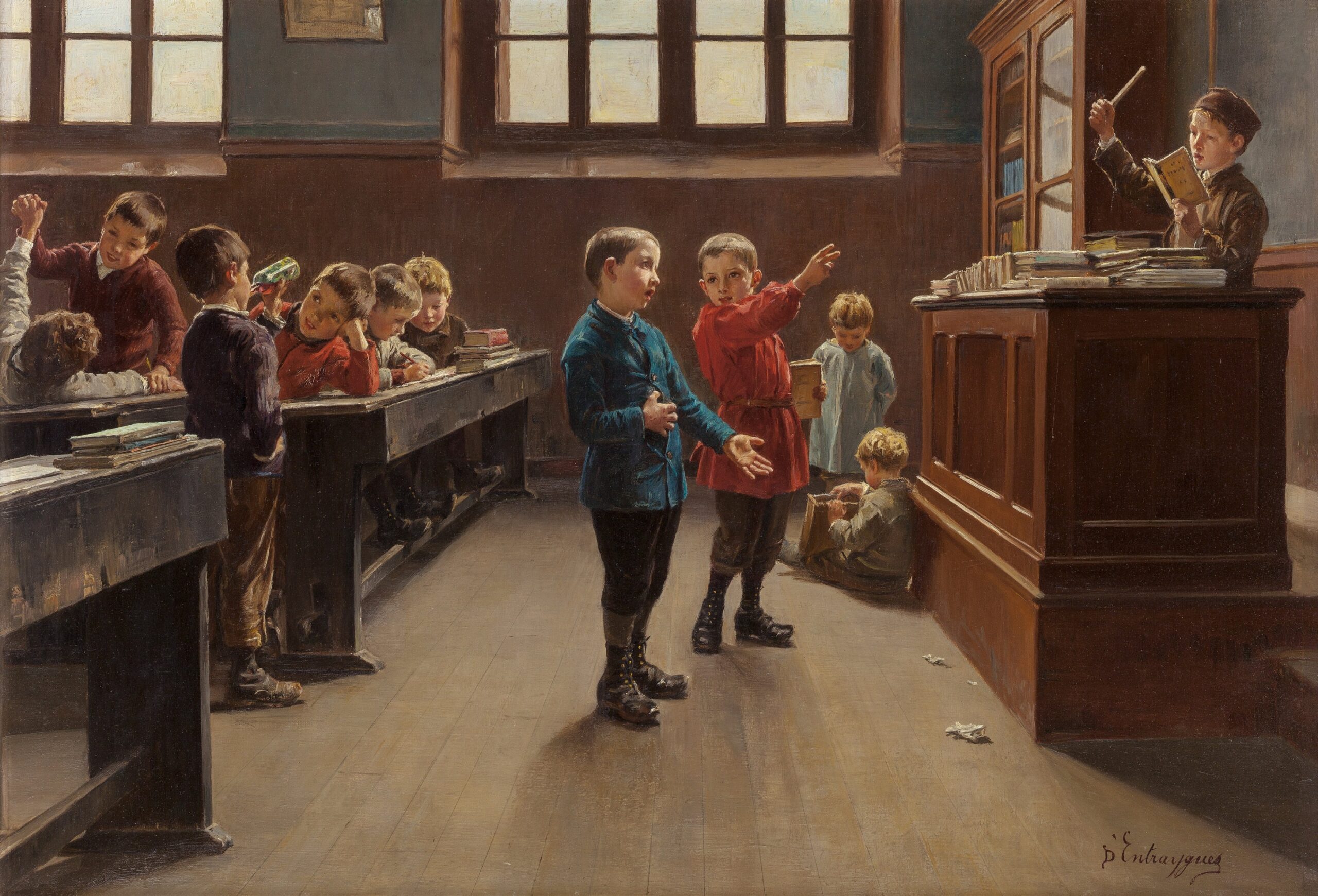
    Image: Charles Bertrand d’Entraygues, Public domain, via Wikimedia Commons

    This article was published by Catholic Culture and is reproduced here with their kind permission.

    By Dr. Jeff Mirus

    One of the great things about the growth of home schooling and various cooperative arrangements is that it puts control of education back into the hands of parents. I don’t mean that it is essential for those who are parents to control the education of children generally. I mean that parents must retain control of the education of their own children.

    This has been reaffirmed many times by the Church, including in the Second Vatican Council’s Declaration on Christian Education (Gravissium Educationis).* While the shift of control of education to the State has made it easier for many parents to “send their children to school”, the increasingly ideological character of education in the modern world has created an Orwellian nightmare of totalitarian and semi-totalitarian indoctrination. In schools throughout the West today, children are continuously “carefully taught” the spiritual and moral equivalent of “black is white and white is black.” In fact, ideological “correctness” is now generally prized above academic quality right through college and graduate school.

    The problem is so serious that it is relatively easy in most modern communities today for parents to do a better and far more wholesome job of educating their own children or at least retaining control over their education through various kinds of independent cooperative efforts. (I know far more about my own country’s situation, but this is certainly true in other places as well.) In America, some locations and some states make this easier than others, but rarely can it be said any longer that home-schooled and cooperatively-schooled children lag behind their peers in public schools. And by the time these students spend a year or two at independent colleges and universities which are unrestricted by federal and state funds, their average intellectual and moral maturity reveals itself to be far higher than the secular norm.

    Through the dominant public methods of education in the United States, in fact, students are most generally taught to think not clearly but ideologically. Both intellectually and morally, such education is a deadly poison.

    Responsibilities and charisms

    I am writing here of the norm. Obviously, in individual cases some parents will do a very poor job of educating their children, just as they will do a very poor job of raising them well at all. But the biggest impediment is the perceived lack of alternatives to the public schools. Whether in the United States or elsewhere, therefore, the Church must play an important role in education—not perhaps primarily through traditional parish and diocesan schools, but especially by raising awareness of and providing spiritual and even material support for home-schooling and what I call cooperative schooling. It is not too much to say that we also need new religious communities to embrace the very Catholic mission of supporting and enhancing home and cooperative school efforts, offering active involvement in these forms of education as well as other kinds of support to struggling families.

    There was a time when it was quite common for new religious communities to devote themselves to the education of orphans and the children of the poor. A revival of authentic religious charisms in the service of enriching home and cooperative educational opportunities may well be just as important now as was the running and staffing of formal parish and diocesan schools just a few generations ago. The Church, of course, has her own obligation to form and educate in the name of Christ Himself, but it is no longer obvious that this obligation is best fulfilled through the restriction of her efforts to Mass, CCD, sacramental formation and formal parochial schools. The time is ripe for each parish to have a Catholic education facilitator on staff who can at the very least orient parishioners to the benefits of home schooling and the possibilities of cooperative schooling in the parish region. Already in the best dioceses of the United States, bishops and Diocesan superintendents of education are becoming engaged with and supporting home schooling and cooperative schooling in their regions.

    These efforts need to be mandated by bishops and expanded through our parishes. The Church may well be able to do far more now through facilitation of parents in the education of their own children than she can do, in many places at least, through the establishment of traditional parish and diocesan schools. The Church is indeed both mater et magistra (mother and teacher), but this does not mean her only or even her best course today is to educate through schools that are simply Catholic versions of the public norms.

    Relatives and friends

    In the 18th and 19th centuries, the Irish often educated their children through illegal arrangements called “hedge schools”, which were located in hedges, ditches, or more often in cabins, houses or barns, and which taught the three Rs and often also Latin and Greek. The parents involved understood that Catholic education was illegal (just as it is disadvantaged by the State in many countries today), and they also understood that they were the primary educators of their children. But then as now, for such home-grown efforts to work, help must come not only from the increasingly beleaguered Catholic Church but also from the relatives and friends of the parents.

    In the regions of the United States in which home-schooling is thriving, there are ever-growing opportunities for what I have been calling cooperative schooling, by which I mean relatively small academic initiatives designed to teach specific subjects, provide common activities for the students, and/or help parents to get the right materials and effective methods for keeping the education of their children on track. But such efforts are mostly in their infancy. Moreover, families with lesser resources and/or two working parents will find it far more difficult to choose this path for the education of their children. This is where parish and diocesan help in various forms can be invaluable, by offering facilities as needed and by providing guidance and even some financial support.

    But this is also where the relatives and friends of those with larger numbers of children can look for ways to be helpful, in everything from financial to actual educational assistance, and definitely not excluding vital levels of moral and spiritual support. It is easier, of course, to drop our children off at what we now think of as traditional schools. But we ought to remember that until the nineteenth century, the vast majority of children were not educated in what we now consider “traditional” schools, and yet intelligence was still on display and children were still able to grow up into well-formed and knowledgeable adults, well-equipped to play productive roles in the social orders in which they found themselves.

    A massive, bureaucratized “educational system” is not necessary to any society. It could even be argued that such a system does more harm than good. In fact that is exactly the point I am making here. Parents must be the primary educators of their children. It is up to the Church and, by extension, all the rest of us, to help make that possible once again today. We must never forget that there is something akin to hunger, thirst, rejection, nakedness, sickness, and imprisonment in the life of the mind and of the soul. Surely our response to such suffering must be clear and generous. For in the end, we know very well what the King will say: “Truly, as you did not do it to one of one of the least of these, you did not do it to me” (cf. Mt 25:31-46).

    And those who failed to help will go away into eternal punishment, but the righteous into eternal life.


    * 3. The Authors of Education [extract from Vatican II’s Declaration on Christian Education]

    Since parents have given children their life, they are bound by the most serious obligation to educate their offspring and therefore must be recognized as the primary and principal educators.11 This role in education is so important that only with difficulty can it be supplied where it is lacking. Parents are the ones who must create a family atmosphere animated by love and respect for God and man, in which the well-rounded personal and social education of children is fostered. Hence the family is the first school of the social virtues that every society needs. It is particularly in the Christian family, enriched by the grace and office of the sacrament of matrimony, that children should be taught from their early years to have a knowledge of God according to the faith received in Baptism, to worship Him, and to love their neighbor. Here, too, they find their first experience of a wholesome human society and of the Church. Finally, it is through the family that they are gradually led to a companionship with their fellowmen and with the people of God. Let parents, then, recognize the inestimable importance a truly Christian family has for the life and progress of God’s own people.12

    The family which has the primary duty of imparting education needs help of the whole community. In addition therefore, to the rights of parents and others to whom the parents entrust a share in the work of education, certain rights and duties belong indeed to civil society, whose role is to direct what is required for the common temporal good. Its function is to promote the education of youth in many ways, namely: to protect the duties and rights of parents and others who share in education and to give them aid; according to the principle of subsidiarity, when the endeavors of parents and other societies are lacking, to carry out the work of education in accordance with the wishes of the parents; and, moreover, as the common good demands, to build schools and institutions.13

    Finally, in a special way, the duty of educating belongs to the Church, not merely because she must be recognized as a human society capable of educating, but especially because she has the responsibility of announcing the way of salvation to all men, of communicating the life of Christ to those who believe, and, in her unfailing solicitude, of assisting men to be able to come to the fullness of this life.14 The Church is bound as a mother to give to these children of hers an education by which their whole life can be imbued with the spirit of Christ and at the same time do all she can to promote for all peoples the complete perfection of the human person, the good of earthly society and the building of a world that is more human.15

    Source: Mirus, Jeffrey, Education must be controlled by a child’s parents, 2023, Catholic Culture, 2025.

  • How & Why to Learn Theology; Dr. Peter Christofides

    How & Why to Learn Theology; Dr. Peter Christofides

    Image: Alvesgaspar, CC BY-SA 4.0 https://creativecommons.org/licenses/by-sa/4.0, via Wikimedia Commons

    Watch the full interview here!

    Peter Christofides, Theology lecturer and undergraduate degree coordinater at Notre Dame University, shares his love for Theology, and talks about ways to learn it.

    Peter grew up in Johannesburg; after two years of military service, he tried studying law, but “realized that my calling was to study Theology.” After completing his Bachelor of Theology, he worked with kids from the streets of Johannesburg, and in school. He then completed an honors and masters in Theology, and a Phd in peace and reconciliation. Then, as a lecturer, he completed a second PhD, on the rediscovery of the role of the laity in the mission of the Church. He says, “Rather than me running after Theology, it seemed like Theology came after me, and I’m constantly improving myself with short courses, and obviously as a lecturer there’s constant preparation. So that is how, I suppose, Theology found me rather than me finding Theology.”

    Asked about whether Theology gets people jobs, Peter says, “There are so many vocations for people who do a bachelor of Theology.” You can study Theology along with another discipline, such as philosophy or law. “We live in a world where ethics seems to be out the window,” and Theology studies can enable a person to work in ethics for any organization. Peter mentioned, “I was invited to the human research ethics committee for the health department of western Australia, just to be the ethical voice for the organization. So when people want to do experiments, what is the ethical side of things?” There are also many opportunities to work in chaplaincy.

    Theology “is not just for those who want to become priests or nuns, there are many, many different vocations that are available, and I think companies are looking for more people to be involved from an ethical perspective…just to understand the standard of ethics from a moral perspective.”

    Peter lectures in Perth for CFE, (Center for Faith Enrichment); each school term, he goes to a different parish and gives a series of lectures. People can attend these for their own interest and personal formation; or, by doing four courses through the CFE, with assessments, and four through the university of Notre Dame, they can achieve an Undergraduate Diploma in Theology. Another way to grow in Theology is to have a group which meets regularly to read and discuss the Bible.

    On teaching Theology in the family, Peter says, “It’s difficult to teach children if you don’t know the topic yourself.” Having good personal formation can helps you, as a parent, to give your children a solid grounding in the Faith. In the Christofides family, Theology “becomes part of our family talk”; rather than setting aside a specific time to formally talk about Theology, it becomes part of the everyday dinner table discussion; “It’s part of how we roll as a family, if you like.”

    Having a strong academic background in Theology also helps one’s own Faith formation; for example, Peter knows Biblical Greek, and so he can listen to the Gospel at Church, and then read the same passage in its original language, which adds a whole layer of meaning.

    There are so many ways to learn Theology; Peter said to me, “There is so much available, Anastasia; free literature online that is available to help us to grow, and increase in our faith as followers of Jesus.”

    Watch the Interview

  • Inspiring Quotes on Education

    Inspiring Quotes on Education

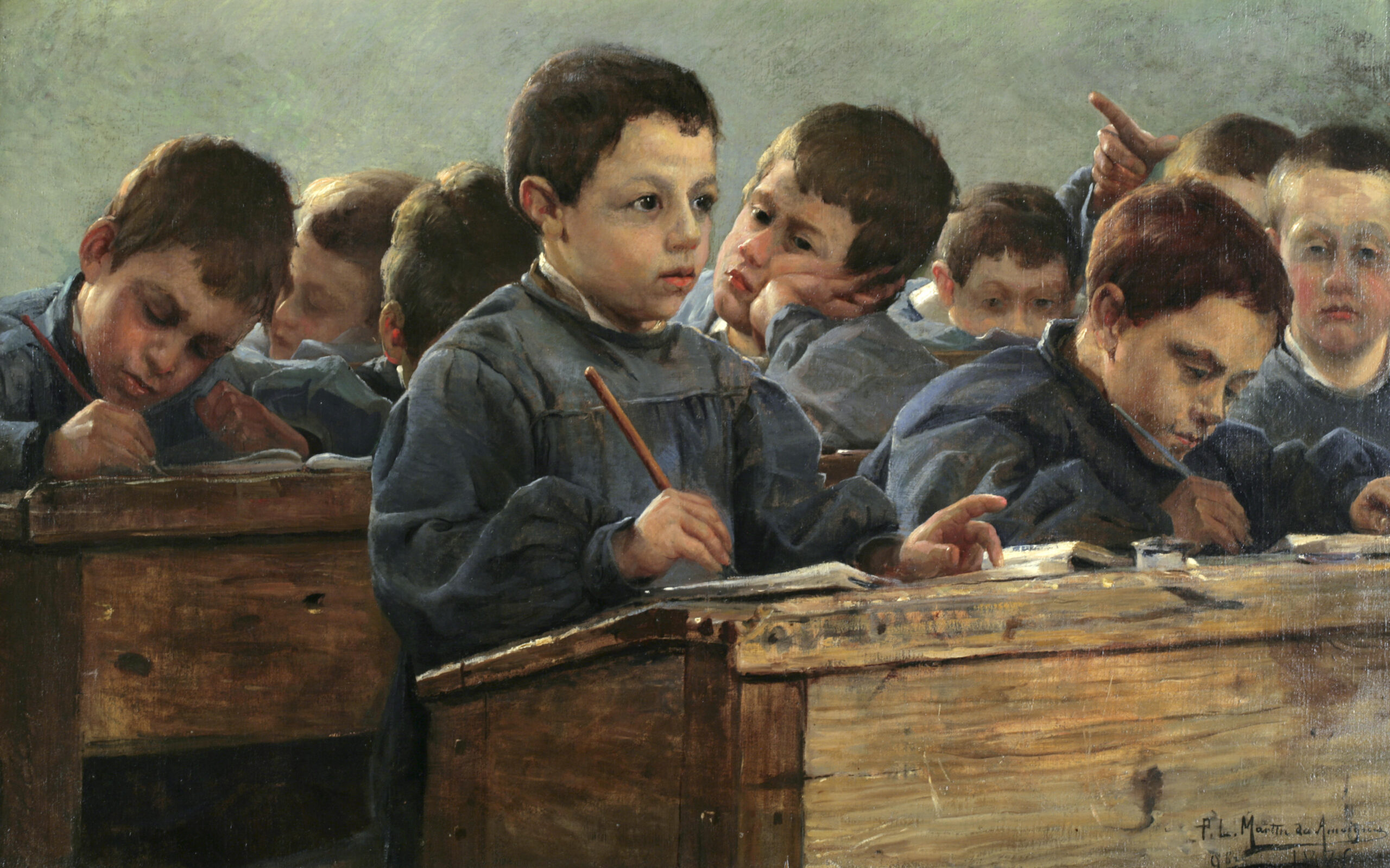
    Image: Jean-Paul Louis Martin des Amoignes, Public domain, via Wikimedia Commons

    “Train up a child in the way he should go, and even when he is old he will not depart from it.” – Proverbs 22:6

    “The home is the first school of Christian life.” 1657, Catechism of the Catholic Church.

    “Without education, we are in a horrible and deadly danger of taking educated people seriously.” – G.K. Chesterton

    “The most gifted minds, when they are ill-educated, become pre-eminently bad.” – Plato, The Republic

    “Parents have the first responsibility for the education of their children. They bear witness to this responsibility first by creating a home where tenderness, forgiveness, respect, fidelity, and disinterested service are the rule. The home is well suited for education in the virtues.” 2223, Catechism of the Catholic Church

    “Keep hold of instruction, do not let go; guard her, for she is your life.” – Proverbs 4:13

    “Education consists essentially in preparing man for what he must be and for what he must do here below, in order to attain the sublime end for which he was created.” Pope Pius XI, Divini Illius Magistri

  • Raising Defenders of Life

    Raising Defenders of Life

    Image: CalebJones2003, CC BY-SA 4.0 https://creativecommons.org/licenses/by-sa/4.0, via Wikimedia Commons

    By Anastasia Marambos

    The Angel Gabriel said to Mary; “you will conceive in your womb and bear a son, and you shall call his name Jesus.” (Luke 1:31) Our God and King and Savior dwelt for nine months in the sanctuary of Mary’s womb. Then, for His dwelling place for thirty years, Christ chose a family.

    A Christian family welcomes children, cares for them, and nurtures them. Thus, for families to flourish is the aim of the pro-life movement. Families are also the foundation of all pro-life institutions, for nobody can advocate for the unborn unless they have first been born.

    Pope St. John-Paul II wrote, “Life is always a good. This is an instinctive perception and a fact of experience, and man is called to grasp the profound reason why this is so.” (Evangelium Vitae, 34) It is in the family that new life is welcomed; in the family, a child first appreciates the profound goodness of human life.

    Pope Leo XIV, then Cardinal Prevost, said “God’s mercy calls us to protect every life, especially those society overlooks—the child yet to be born and the elderly nearing their journey’s end—because each bears Christ’s face.” (Homily, Suburbicarian Diocese of Albano, 2025) In the Christian family, the most helpless ones are cherished, for “as you did it to one of these the least of my brethren, you did it to me.” (Mtt 25:40)

    Pope Pius XI wrote, “the family is more sacred than the State and…men are begotten not for the earth and for time, but for Heaven and eternity.” (Casti Connubii, 69) The U.S. branches of government, legislative, judiciary, and executive, reflect the task of government to make, apply, and enforce laws; the task of the family is to “raise up fellow-citizens of the Saints, and members of God’s household.” (Eph. 2:19; Casti Connubii, 13)

    No wonder, in the modern world, the family is under attack! The Evil One has good reason to fear the family, for it is in the family that saints are raised.

    The Catechism says, “In our own time, in a world often alien and even hostile to faith, believing families are of primary importance as centers of living, radiant faith.” (CCC, 1656)

    By welcoming children and educating them in the Faith, by frequently approaching God through prayer and the sacraments, and by imitating the Holy Family, families can counteract the culture of death.

    I am blessed to be the eldest of ten in a Catholic homeschooling family. I grew up surrounded by children. I have early memories of looking at the picture of an unborn baby sibling on an ultrasound scan and witnessing the undeniable humanity of this beautiful person. I vividly remember when mum gave us the joyful news that “I’m having a baby,” and that was a baby, my younger sibling, not a collection of cells. In less than a year, we welcomed that baby into our home, held him in our arms, and gave thanks to God for the blessing.

    My family taught me that people, no matter how small, are worth sacrificing for. You always sacrifice something in a large family – whether that be the last chocolate chip cookie in the jar because somebody got there first, or hours of your day because someone is sick and needs looking after. However, this is not a con; this is a pro, because you find so much joy in helping this beautiful person that God has put into your life.

    I don’t think anyone can ever fully comprehend how tragic abortion is, or fully understand the immeasurable value of a human being. However, learning from a young age that every human being is a child of God, redeemed by Christ, definitely helps.

    Personally, I was really inspired by growing up surrounded by life and Faith. This has motivated me in every pro-life activity I’ve been involved in, whether crocheting baby blankets for a pregnancy center, learning about defending life in a culture of death, or organizing prayer vigils for the unborn.

    By welcoming your children into the world and raising them in the Faith, you are already doing something intrinsically pro-life. To raise a child Catholic is to raise them pro-life, because we know that God became an unborn baby.

    Here are some ideas for pro-life activities you can do as a family:

    – add “all unborn babies and their parents” to your prayer intention list for your daily rosary.

    – pray to St. Gerard Majella and St. Gianna Molla, patrons of mothers and unborn babies.

    – pray the Spiritual Adoption prayer of Venerable Fulton Sheen.

    – pray the litany to Jesus in the Womb of Mary.

    – attend March for Life.

    – donate clothes to a pregnancy center.

    Prayer is immensely powerful for the pro-life movement – because it asks the help of the God Who loves unborn babies; the unborn are created by God and Christ died to redeem them. And “with God, nothing will be impossible.” (Luke 1:37)

  • The family: Not for production or consumption, but joy

    The family: Not for production or consumption, but joy

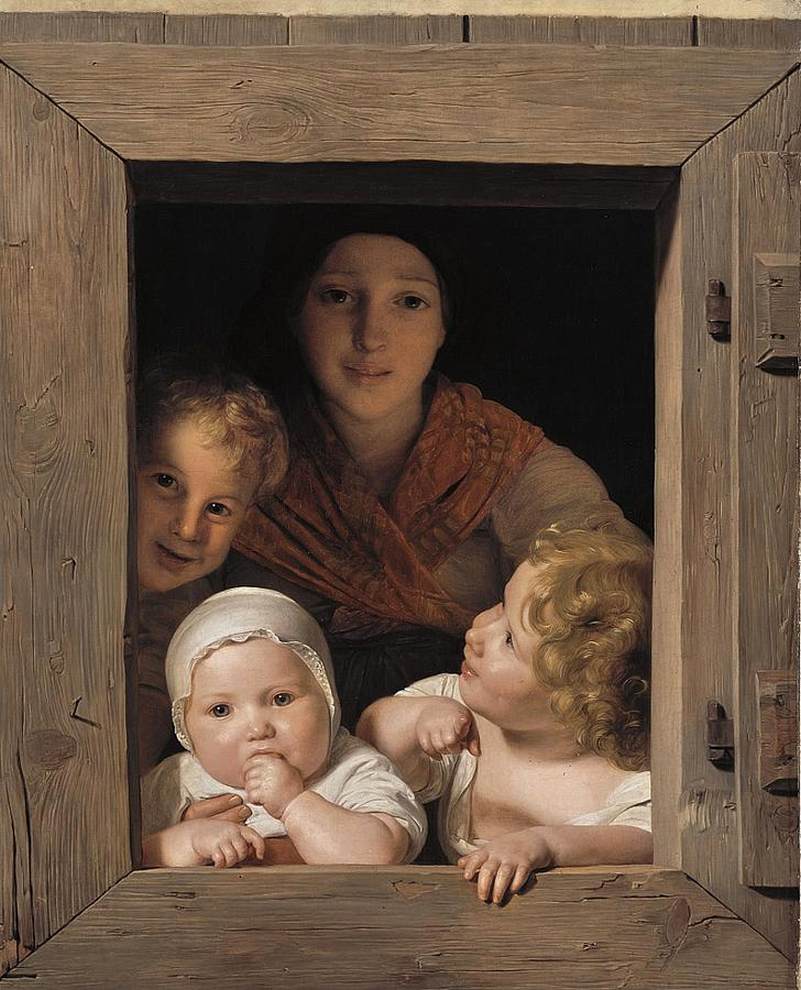
    Image: Ferdinand Georg Waldmüller, Public domain, via Wikimedia Commons

    This article was published by Catholic Culture and is reproduced here with their kind permission.

    By Dr. Jeff Mirus

    In his comments on industrial accidents on March 9th, Pope Francis mentioned that “the clear separation of family and work environments has had negative consequences not only on the family, but also on the work culture.” The Holy Father made the point that the sharp separation between the two has reinforced the idea that the family is the place of consumption and the enterprise the place of production.

    This observation is right on target. In a rural economy of small farmers, for example, the family flourished in an atmosphere of shared responsibilities and benefits which encompassed the whole of life—a life more often than not rooted in prayer for what God alone could control (such as the weather) and lived out through hard work and shared leisure in a deeply familial setting. If we compare this pattern with that of an industrial society, we find intense pressures in precisely the opposite direction.

    In the society of factories and offices, for example, it is necessary to separate parents and children for the bulk of most days, as well as separating spouses from each other. This was mitigated during a period of single income families, but only through the familial marginalization of fathers. Still, it was the rise of industrialization that led to the regimentation of widespread public education, taking the children out of the home from an early age, and eventually separating the father (in most cases) as primary producer from the mother and children as, in effect, consumers. While it is difficult to respond effectively to widespread socio-economic trends, it is clear enough that over the past two hundred and fifty years not only was the family essentially restructured owing to economic shifts but also the human sense of satisfaction, pride and power came to be increasingly linked to what we might call the world of business.

    The family became increasingly subordinated to an engine of material progress which operated not only independently of the home, but in a very real sense in an unequal competition with the home. Worse still, as businesses became larger and larger (even to spanning the globe), job transfers proliferated. Once again the family was subordinated to commercial interests, human “roots” ceased to have significant meaning in the history of families and close-knit communities, modern men, women and children increasingly became atomized individuals who bounced from place to place and situation to situation throughout their lives. Given the context, which was usually portrayed as offering “superior opportunities”, it is no wonder that the sins of an uprooted individualism—including divorce, psychologically damaged children, and the drive to find one distorted private satisfaction after another—became a way of life.

    Of course, the problems, temptations and sins characteristic of the human person are present in every era and under every circumstance. Nonetheless, it is clear that societies and their economic engines can be organized more or less beneficially for the life of the family. When this develops in less beneficial ways, we end up with widespread personal instability and distress, the normalization of many individualized forms of immorality, the decline of the family and close-knit societies, and the consequent loss of natural communities of support. Another result is that a great many people regard family life as the cause of most of their problems, and so they continue their flight from it.

    But what has really been the cause, in the vast majority of cases, is the more or less deliberate evisceration of family life.

    The Future

    One of the benefits of the COVID epidemic was to demonstrate that the prevailing model of work outside the home was anything but economically necessary for huge numbers of people. Granted that massive factories are still considered economically necessary, there is still an ever-increasing likelihood that even many of those who depend ultimately on machinery can find ways to fulfill their “modern utility quotient” at home—and that children can learn at home, or at least in smaller, more parent-centric schools that are not mere ideological hives of the State—and that parents and children alike can find the resulting increased interaction among all family members to be a delightful change. Interdependence and mutual support increase as relationships deepen. Love grows, and with it the most fundamental personal and social stability known to humankind.

    The family can become once again the primary community of human persons, essential and deeply beneficial to each member, out of which blossoms an intentionally more personal and supportive social order. Of course, our current larger social order—dominated as it is by the spiritually and psychologically injured—will continue to exert a corrupting imperial influence over everything. It is more than likely that, as genuine happiness continues to elude the leaders of the dominant culture, these leaders will seek through ever more draconian methods to eliminate the witnesses against their values, whom they will blame instinctively for interfering with happiness.

    But they will remain unhappy, and the startling truth is that those they most abhor will remain joyful even in the midst of any imposed suffering. These, in the long run, are fruitful circumstances for evangelization. But we must all look around, if we have not done so already, to see how the new economic normal can be used once again to serve family life, until the family becomes (to use a shameful vocabulary) the center of “production”. I mean the formation of persons.

    We ought to know by now that human happiness runs through and arises from families, both naturally and supernaturally in Christ. Not all of us have equal opportunities. Even some of us who work at home may be known to hole up at our desks without sufficiently participating in the family dynamic. Life is full of balance problems, which we all must constantly address. Nor will the most common possibilities for a renewed family life apply to everyone equally. It is far easier to be family-centric in some lines of work than in others; it is even far easier to strip back to a single income in some lines of work than in others. But to the best of our ability, we must make life family-centric again. And we must architect a society which frees not so much the individual as the family to make good on its Divinely constituted purpose and genius.

    The Holy Father is right about this. The family is not an unfortunate locus of consumption in a world dominated by the demands of productivity. Still less is the family a mere convenience to be continually restructured according to selfish demands. The family is the locus of life. The family is where human persons flourish. The healthy family has been created to spread peace and stability and happiness through a river of love. Anyone—from the most obscure contemplative to the mightiest politician, from the policeman on the street to the actor on the screen, from the factory worker to the knowledge worker, from the planted field to the polished board room—anyone who is not striving directly or indirectly to serve the good of the family is simply not striving to serve at all.

    About the author: Jeffrey Mirus holds a Ph.D. in intellectual history from Princeton University. A co-founder of Christendom College, he also pioneered Catholic Internet services. He is the founder of Trinity Communications and CatholicCulture.org.

    Source: Mirus, Jeffrey, The family: Not for production or consumption, but joy, 2023, Catholic Culture, 2025.

  • Catholic Family NZ

    Catholic Family NZ

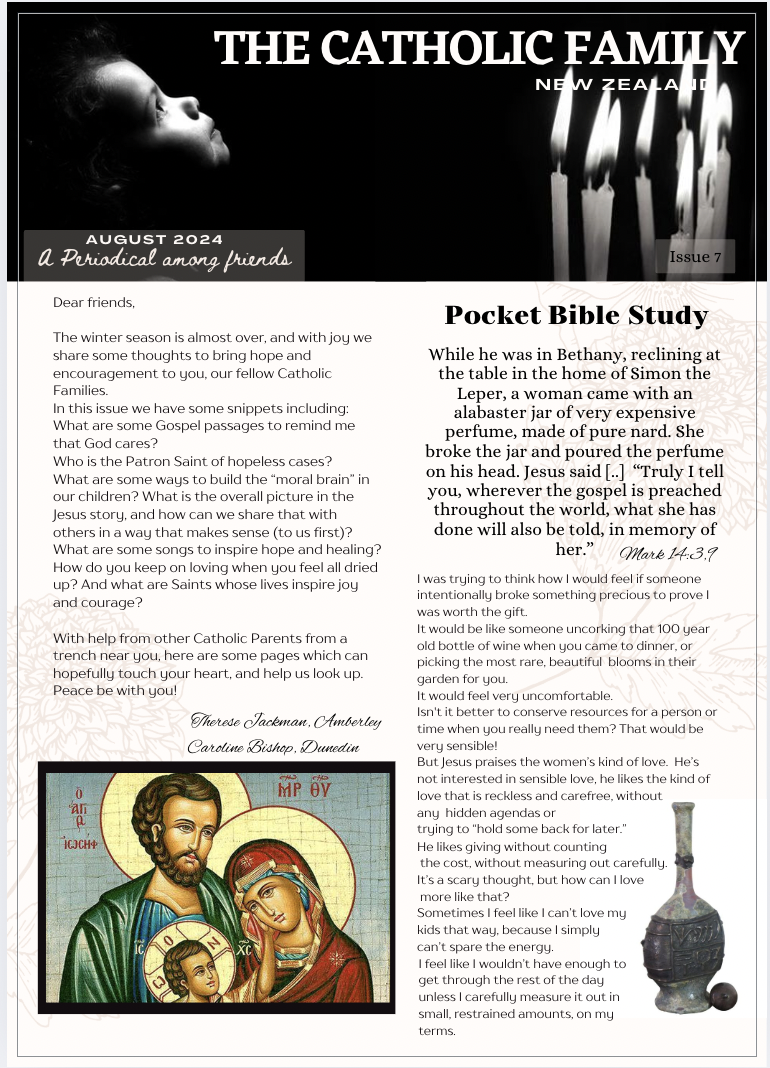
    Image: Front page of Catholic Family NZ newsletter.

    Recently, I visited a lovely young Catholic family; I had lots of fun making play-dough snowmen with Esther (age 5), Dominic (age 3), and Louis (age 2), while talking to their mum, Therese, about Catholic Family NZ. Geared (as the name suggests) for Catholic families living in New Zealand, it is a quarterly newsletter including inspiring stories, testimonies, fun quotes, and more. Therese has been running this since 2021.

    Therese says:

    The desire for this little family periodical is to – in the spirit of St Paul, “encourage one another, and build one another up.” (1 Thess. 5:11) Life as Catholic parents is hard and often lonely, as often no one sees the real and daily struggles in the hidden little Mission fields of our homes. The call of the Gospel sets before us a beautiful but often very challenging ideal, of laying down our life like “a grain of wheat” (John 12:23) and living with the trust of a little sparrow in the hands of our Heavenly Father, even when the pressures of life are often relentless and exhausting. Our hope is that these small pages can bring some companionship on the journey towards holiness; with some light and hope from fellow pilgrims, who though they may be geographically far away, are walking exactly the same path, every day.

    If you are living in New Zealand, you can sign up for the Catholic Family NZ newsletter by contacting: Catholicfamilynz@gmail.com