Author: Anastasia

  • Homeschooling Mum & Camp Organizer: Lynn Burton

    Homeschooling Mum & Camp Organizer: Lynn Burton

    Watch the Full Interview Here

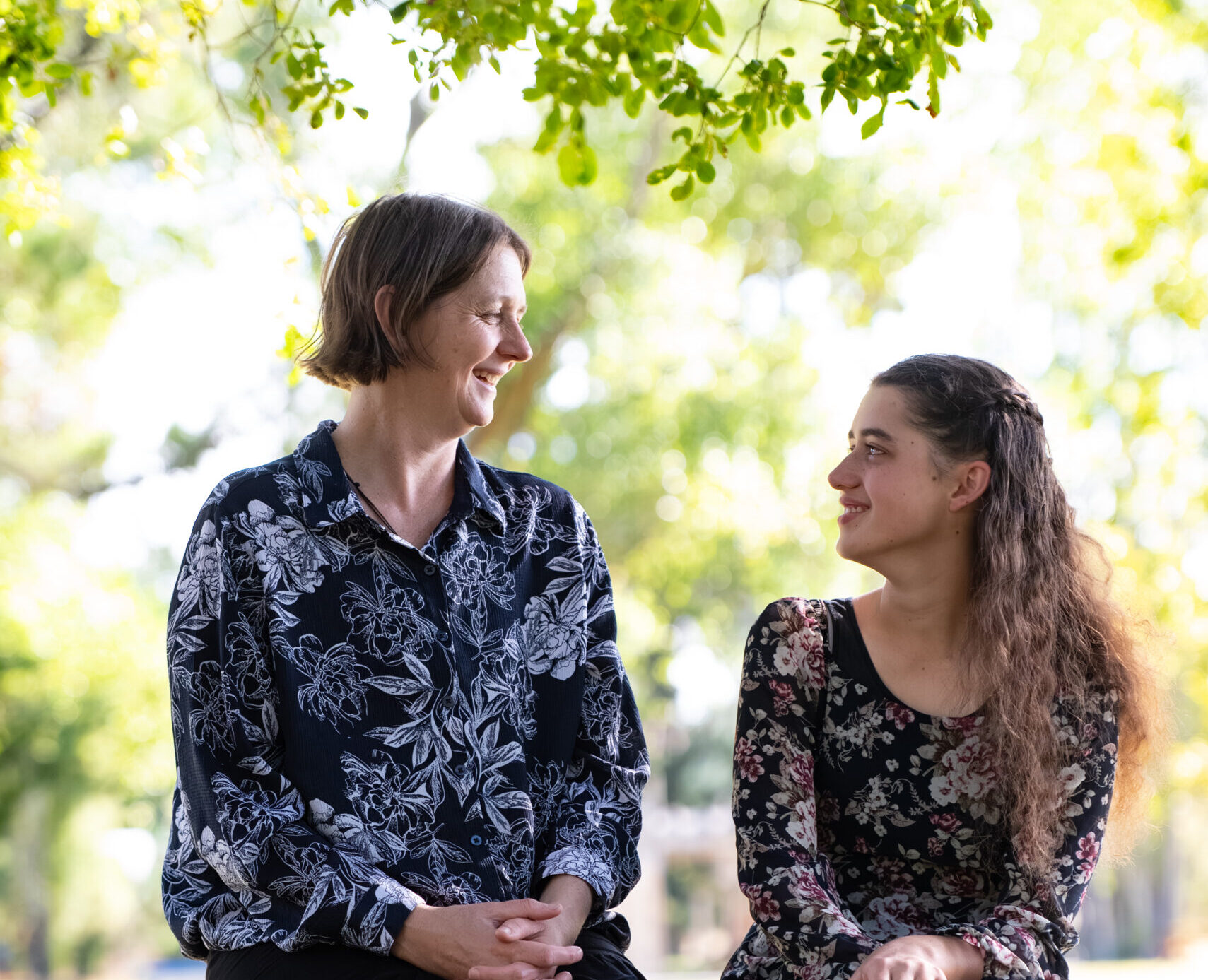
    Lynn has been homeschooling since 1997. Her eldest three went to school for a time, and then, because of bullying issues, she and her husband decided to try homeschooling for six months. Lynn had always been interested in homeschooling, and said, “I believe that it was something that the Lord put on my heart to do.” Lynn is a mum of thirteen, and she still homeschools her youngest two.

    There were less resources available in 1997 then there are now, and Lynn talks about how she started homeschooling with a Protestant curriculum. Then, she started adding Catholic material and she “really began to develop our own curriculum and our own program.”

    Lynn was “very influenced by Charlotte Mason’s philosophy of education,” and likes good books; she says “we’ve all been quite voracious readers.” She mentions Real Learning: Education in the Heart of the Home, by Elizabeth Foss. Elizabeth Foss was a mum of seven, and so has some good advice to offer for large families.

    Lynn mentions that all her kids have some level of dyslexia. Homeschooling gave Lynn “the ability to…adapt curriculum to suit their needs and their struggles, and it’s allowed us to maintain their self-esteem and their learning while making allowances for where their struggles are.” Some of her children went for assessments, and “while reading abilities have been, because of their dyslexia, below their age-group, their vocabulary, their comprehension, their word knowledge, has all been a few years above.” Lynn could cater to the needs of each child through homeschooling, especially when “what worked for one child didn’t always work for the next child.” Lynn continues, “often their self-esteem, which could have been eroded in a school setting, was preserved by homeschooling.”

    Homeschooling has also helped the Burton family grow closer to each other. Lynn says, “The family relationships, the lifestyle relationships, that keeps the family unit together in a different way than sending them to school does.”

    The Burton family live in the country, which can be a little isolating. There was one other Catholic homeschooling family living close by, but otherwise “a lot of the time we were on our own.” Lynn made an effort to take her children to events like March for Life and Christus Rex. In 2001, along with another family, Lynn started a Catholic homeschooling camp. This gave her children the chance to be around priests, religious, and other Catholic kids, and forge lasting friendships.

    A typical day at the camp will start with 9am Traditional Latin Mass, followed by morning tea, and then talks and Catechesis. Sometimes some people chant the office, or there is Catechesis of the Good Shepherd, or Culture Project sessions.

    Lynn says “It is authentically Catholic…we are unapologetically Catholic.” Once, someone who wasn’t Catholic at the time attended a camp and “she is now Catholic.” The camp will occur for the twenty-fourth time this year.

    Watch the Interview

  • 2025 OCH Got Talent!

    2025 OCH Got Talent!

    John-Paul, age 10, recites “America for me” by Henry van Dyke

    Francis, age 10, shows his woodwork

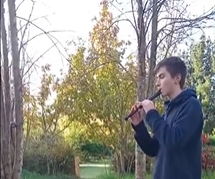
    Benjamin Mischewski, age 15, plays The Wellerman (Theme and Variations) – Sea Shanty from New Zealand, arranged by Sarah Jeffrey

  • “I love it” – Sarah Loretz

    “I love it” – Sarah Loretz

    Watch the full interview

    Three days after Christmas, 2024, Sarah walked up the aisle of a beautiful, little, crammed-full Church, and married Dominic in a Traditional Latin rite nuptial Mass. Sarah was homeschooled most of her life, which she says prepared her for marriage. While being homeschooled, Sarah “had to learn to take on a lot of responsibility” through helping with chores at home and looking after younger siblings. Homeschooling also taught her social skills as she “had to go out and meet people, ‘cause I didn’t just have, you know, friends that I’d met at school.”

    Sarah talks about her love for acting and drama; “right from a young age, I was a performer. I would put on little shows for my parents.” At around seven, she auditioned and played one of the lost boys in Peter Pan. She also has performed in the Three Little Pigs, Alice in Wonderland, and participated in drama lessons and drama clubs. When she finished being homeschooled, Sarah took speech and drama exams. She speaks about how being marked by an examiner was a new experience for her.

    While homeschooling, Sarah’s mum graded much of her work, and they also used auto-graded quizzes through Homeschool Connections. Sarah mentioned that the auto-graded quizzes made things easier for her mum, Ruth Green, who is a busy mum of nine (Sarah is the eldest). Sarah says, “I love it, I loved having lots of siblings” Leaving home to get married, “I’ve missed the noise.”

    Sarah says, “being homeschooled really helped my Faith, because Mum and Dad really made an effort to teach us all the Faith.” Evening prayer was very important in their home and they attended Mass as a family. Sarah’s mum would read them lives of the Saints, which gave them examples to imitate. They also celebrated feast days. Sarah says, “Having younger siblings…gives you plenty of opportunities to practise virtue…especially patience…And it also taught you to love one another, even when you didn’t feel like it.”

    The Green family have celebrated St Joseph’s day for a long time. They prepare a St Joseph’s table with lots of traditional Italian food. Sarah tells about how once there was a famine in Italy, and the people prayed to St Joseph. Then, a lot of rainfall made crops grow. In thanksgiving, the people had a big feast to celebrate St Joseph, and this was the beginning of the St. Joseph’s table. On St Joseph’s day, Ruth Green would make spaghetti with bread crumbs on top, for St Joseph’s carpentry. They also have traditional Italian desserts, and bread in the shape of a crown of thorns, a hammer, or a lily. A statue of St Joseph stands in the centre of the table. Sarah says this tradition “brought the Saint to life for us.” The Green family would make Mexican food for the feast of Our Lady of Guadalupe, put the picture of Our Lady of Guadalupe on the prayer table, and read about her. Sarah says, “It’s so amazing ‘cause it means that we’re looking forward to that every year and it’s imprinted on our minds as ‘yes, this is an amazing thing, so we want to celebrate this Saint.’”

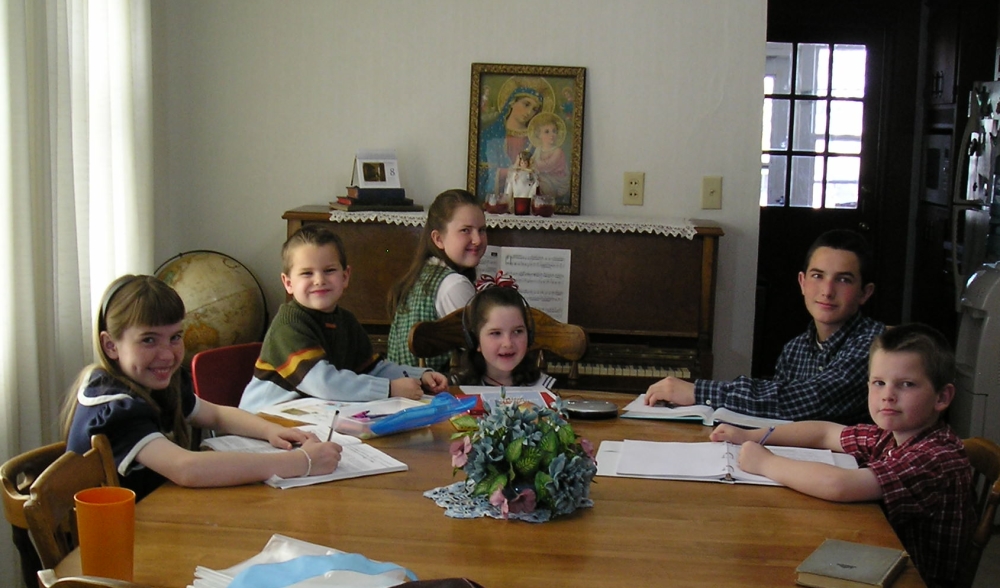
    Asked for a homeschooling study tip, Sarah says, “having your own space to study” is great, as well as having classical music in the background.

    Watch the interview

    You may also enjoy an interview and an article with Sarah’s mum, Ruth Green

  • “His curriculum is holiness.” – Marian Le Grelle

    “His curriculum is holiness.” – Marian Le Grelle

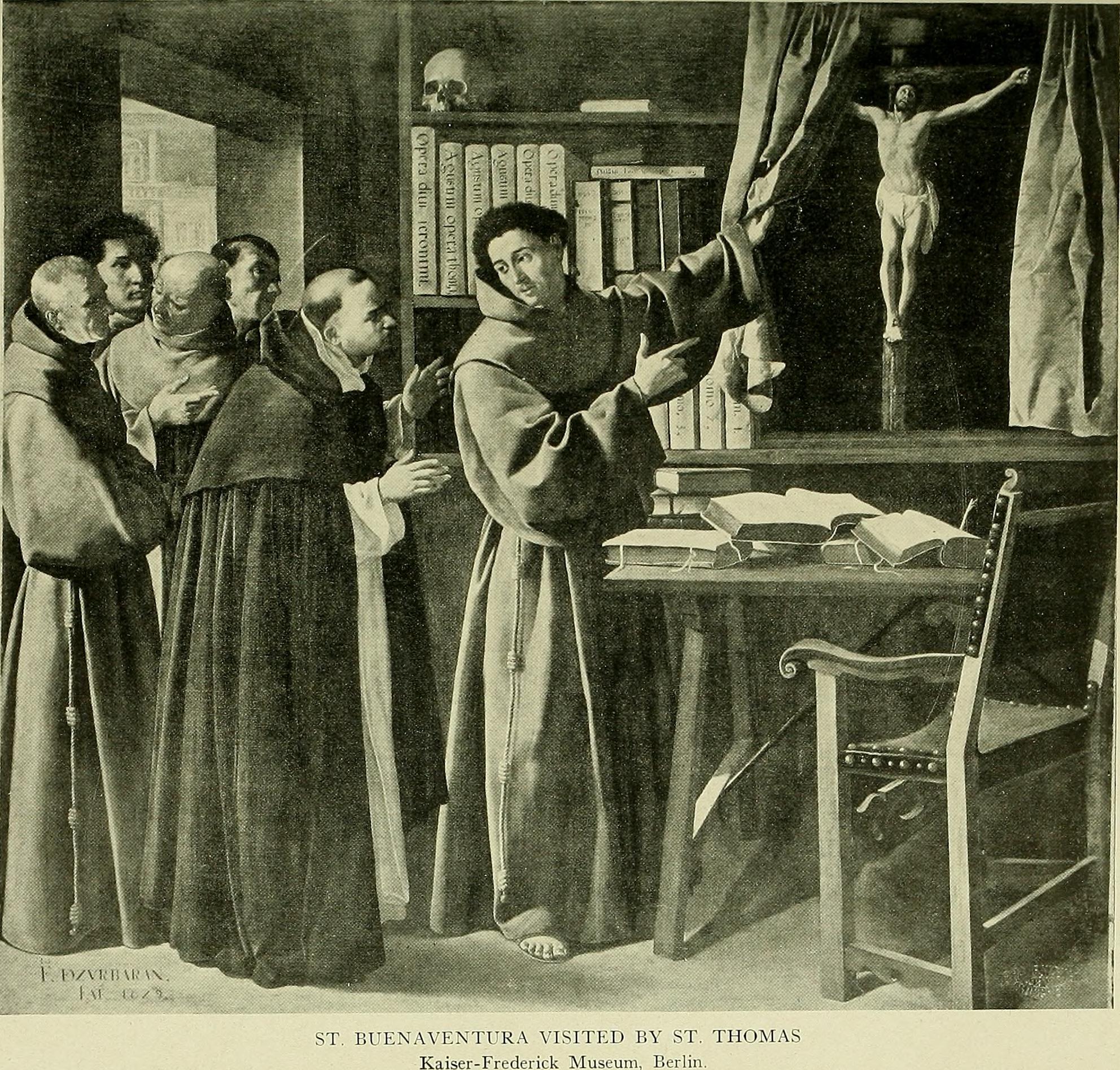
    Image: Francisco de Zurbarán, No restrictions, via Wikimedia Commons

    Written by Marian Le Grelle

    AMDG 

    “But he that shall scandalize one of these little ones that believe in me, it were better for  him that a millstone should be hanged about his neck, and that he should be drowned in the  depth of the sea. Woe to the world because of scandals.” Matthew 18:6 

    On pilgrimage, I asked God to show me His will for my life within the vocation of marriage  and motherhood. The answer was a clear, “Take the children to daily Mass.” Confirmation  came in writing with the words that followed explaining that children console Him for the  ingratitude of others. 

    Homeschooling was a decision to follow my conscience. My conscience said, “Don’t hurt  the children by having them lied to by people in authority over them.” Parenthood entails culpability; we are responsible before God for our choices in our children’s education. 

    The greatest gift of homeschooling is being in relationship with God as a family. It’s a  privilege to get to know and to love each child. It’s a privilege to watch them grow while  growing closer to God and to each other day by day. 

    His curriculum is holiness. Virtues and gifts of the Holy Ghost cover most topics and the  assignments consist of loving one another while juggling pregnancy, moving, sickness, birth,  death, daily duty, study, acts of charity to others, and recreation. These crosses and joys are  part of the graduation program and are far more powerful than academics in shaping our  families into His image. 

    Today there is much support for homeschooling in online schools and in homeschool  groups. We’ve been blessed to have the help of our priests and religious as well as Mother  of Divine Grace School, an American online school which allows us to be the primary  educators of our children. They know why we are homeschooling and want to help us teach  the faith of the apostles to our children that they may know their faith. They know we  aren’t perfect and help us on our way. 

    Many assume that we must be patient because we homeschool. We aren’t naturally  patient, but we get a lot of practice in that virtue and a lot of reasons to approach the  sacraments. We can’t control what happens in our relationships with each other, but as  principals of the school, we can set the house rules and choose our responses to what God  allows in our relationships. We can teach love and truth and leave the rest to God.  

    St.Thomas Aquinas once asked St. Bonaventure in which books Bonaventure had learned his “sacred science.” St. Bonaventure pointed to the crucifix and answered, “This is the source  of all my knowledge.” The saints give every homeschooler confidence and hope that he or she will turn out okay and much better than okay. They become the saints they are called  to be because they know themselves and discern the will of God in their lives.

  • Easter Workshop

    Easter Workshop

    Image and article from the Catholic Culture website, and used with the kind permission of Catholic Culture.

    by Catholic Culture Staff

    Easter Overview
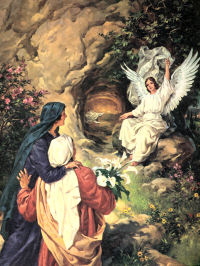
    He is risen! Alleluia! We have reached our goal: Easter, the day we celebrate Christ’s resurrection. This is the single most important feast day of the Church. In the words of the Eastern church calendar this is “the sacred and great Sunday of the Pasch, on which we celebrate the life-giving Resurrection of our Lord and God, the Savior Jesus Christ” (Francis X. Weiser, S.J., The Easter Book). With Christ’s death and resurrection, Christ has conquered sin and death, the gates of heaven are now open to man. This is the Feast of Feasts, the Solemnity of Solemnities, the highest Feast of the Church, the holiest day of the year. Like the churches, the household is decorated with numerous flowers, like lilies and hyacinths, and the table decorated with the finest linens and place settings.


    Easter Activities & Customs

    After 40 days of penance and preparation, we have finally reached our goal. Now is the time for rejoicing. This is a day for family dinner and activities, to practice many already established traditions and to share the joy together with family and friends. The best of everything should be used today: flowers, china, silver and foods. There should be no holding back in the rejoicing!


    Easter Egg Hunt & Easter Baskets

    After all the egg decorating, it is fun to search for Easter eggs, outdoors if possible. Incorporate a new tradition of adding a special Alleluia Egg or golden egg. The person who finds this egg wins a special prize, or gets to perform a special coveted task.

    Easter baskets are an American tradition, full of chocolate bunnies and eggs, jelly beans and marshmallow candies. Originally the Easter baskets were a way to celebrate the end of Lenten penance. All foods that were forbidden during Lent are placed in the basket and blessed: cheese, butter, eggs, meats and sweets. For those that are sugar conscious, the baskets can also include little toys, books, flowers, religious holycards with pictures of the resurrection, and a few Easter eggs. There should be reminders that this is the feast of the resurrection, and not just a day to “pig out.”


    Easter Recipes

    Easter foods help us to enhance the celebration of the Feast of all feasts. We should make the Easter foods as elegant as we can. Beginning with breakfast, we can serve sliced ham and scrambled eggs and Kulich and sweet butter and bagels. For dinner the traditional Easter lamb along with all the trappings makes this meal stand out from all others. Don’t forget to bake one of the many Easter breads that will have your family flocking to the kitchen to see what smells so good. Whatever you choose you can create a tradition in your own family that they will look forward to year after year.


    Blessing of the Family Table

    Among the pious exercises connected with Easter Sunday, mention must be made of the traditional blessing of eggs, the symbol of life, and the blessing of the family table; this latter, which is a daily habit in many Christian families that should be encouraged, is particularly important on Easter Sunday: the head of the household or some other member of the household, blesses the festive meal with Easter water which is brought by the faithful from the Easter Vigil. — Directory on Popular Piety and the Liturgy


    Visit to the Mother of the Risen Christ

    At the conclusion of the Easter Vigil, or following the Second Vespers of Easter, a short pious exercise is kept in many places: flowers are blessed and distributed to the faithful as a sign of Easter joy. Some are brought to the image of Our Lady of Dolors, which is then crowned, as the Regina Coeli is sung. The faithful, having associated themselves with the sorrows of the Blessed Virgin in the Lord’s Passion and Death, now rejoice with her in His resurrection.

    While this pious exercise should not be incorporated into the liturgical action, it is completely in harmony with the content of the Paschal Mystery and is a further example of the manner in which popular piety grasps the Blessed Virgin Mary’s association with the saving work of her Son.” — Directory on Popular Piety and the Liturgy


    Renewal of Baptismal Promises

    Not all the family can attend the Easter Vigil due to its time and length. However, It is highly recommended that the family members renew their baptismal vows and sprinkle themselves with the Easter Water as is performed during the vigil celebration. Everyone’s baptismal candles and garments can be put on display on the family altar or as a table centerpiece to remind us of our baptism and commitment to our baptismal vows.

    Renewing baptismal promises can also be done at home on the Feast of the Baptism of the Lord in January, and on the anniversaries of baptism.

    This version is from the Roman Missal, 3rd Edition from 2011.


    Easter Prayers & Hymns

    There are many hymns for Easter. These are just a few: Christ the Lord is Risen Today; O filii and filiae (Ye Sons and Daughters); Regina Coeli; Jesus Christ is Risen Today; Alleluia, the Strife is O’er; Ad regias Agni dapes (At the Lamb’s High Feast). These hymns all illustrate the joy of the Church, praising Christ’s triumph over the grave. Some of them go back to the 4th century and were written by St. Ambrose, the founder of hymnody in the West.

    Original Source:

    Catholic Culture Staff, “Easter Workshop” Catholic Culture. 2025. Last accessed: 19/4/25. Web.

  • Good Friday of the Lord’s Passion

    Good Friday of the Lord’s Passion

    Image and article from the Catholic Culture website, and used with the kind permission of Catholic Culture.

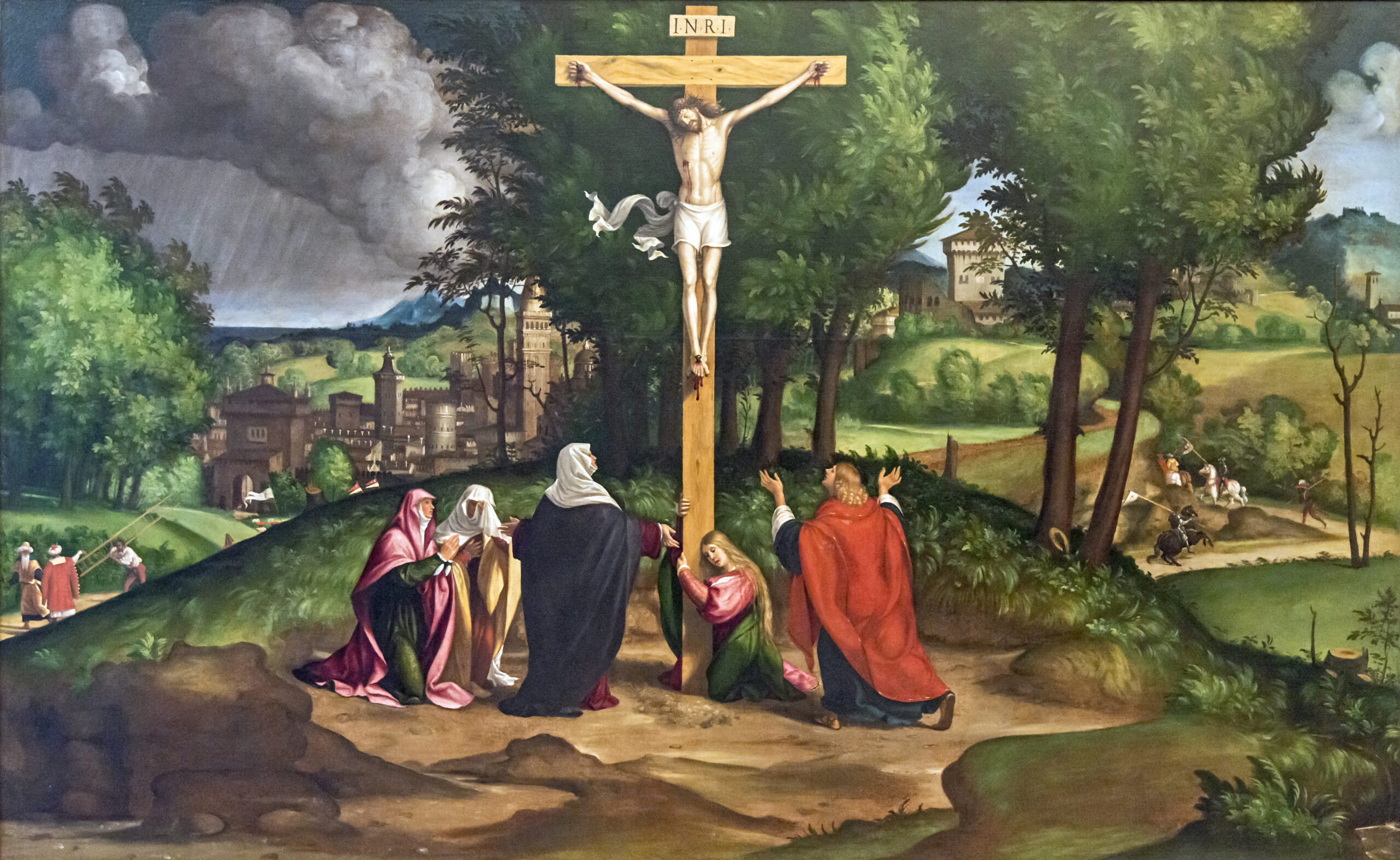
    “It is accomplished; and bowing his head he gave up his spirit.”

    Today the whole Church mourns the death of our Savior. This is traditionally a day of sadness, spent in fasting and prayer. The title for this day varies in different parts of the world: “Holy Friday” for Latin nations, Slavs and Hungarians call it “Great Friday,” in Germany it is “Friday of Mourning,” and in Norway, it is “Long Friday.” Some view the term “Good Friday” (used in English and Dutch) as a corruption of the term “God’s Friday.” This is another obligatory day of fasting and abstinence. In Ireland, they practice the “black fast,” which is to consume nothing but black tea and water.


    Liturgy
    According to the Church’s ancient tradition, the sacraments are not celebrated on Good Friday nor Holy Saturday. “Celebration of the Lord’s Passion,” traditionally known as the “Mass of the Presanctified,” (although it is not a mass) is usually celebrated around three o’clock in the afternoon, or later, depending on the needs of the parish.

    The altar is completely bare, with no cloths, candles nor cross. The service is divided into three parts: Liturgy of the Word, Veneration of the Cross and Holy Communion. The priest and deacons wear red or black vestments. The liturgy starts with the priests and deacons going to the altar in silence and prostrating themselves for a few moments in silent prayer, then an introductory prayer is prayed.

    In part one, the Liturgy of the Word, we hear the most famous of the Suffering Servant passages from Isaiah (52:13-53:12), a pre-figurement of Christ on Good Friday. Psalm 30 is the Responsorial Psalm “Father, I put my life in your hands.” The Second Reading, or Epistle, is from the letter to the Hebrews, 4:14-16; 5:7-9. The Gospel Reading is the Passion of St. John.

    The General Intercessions conclude the Liturgy of the Word. The ten intercessions cover these areas:

    1. For the Church
    2. For the Pope
    3. For the clergy and laity of the Church
    4. For those preparing for baptism
    5. For the unity of Christians
    6. For the Jewish people
    7. For those who do not believe in Christ
    8. For those who do not believe in God
    9. For all in public office
    10. For those in special need

    For more information about these intercessions please see Prayers for the Prisoners from the Catholic Culture Library.

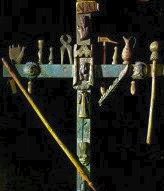
    Part two is the Veneration of the Cross. A cross, either veiled or unveiled, is processed through the Church, and then venerated by the congregation. We joyfully venerate and kiss the wooden cross “on which hung the Savior of the world.” During this time the “Reproaches” are usually sung or recited.

    Part three, Holy Communion, concludes the Celebration of the Lord’s Passion. The altar is covered with a cloth and the ciboriums containing the Blessed Sacrament are brought to the altar from the place of reposition. The Our Father and the Ecce Agnus Dei (“This is the Lamb of God”) are recited. The congregation receives Holy Communion, there is a “Prayer After Communion,” and then a “Prayer Over the People,” and everyone departs in silence.


    Activities
    This is a day of mourning. We should try to find ways to slow down and have more quiet to contemplate this solemn day. Many people take time off from work and school to participate in the devotions and liturgy of the day as much as possible. Some families leave house dark and maintain some silence during the 3 hours (noon — 3p.m.), and keep from loud conversation or activities throughout the remainder of the day. Other ideas for keeping the day solemn is restricting ourselves from any outside entertainment—TV, music, computer, phones, social media, games—these are all types of technology that can distract us from the spirit of the day.

    If some members of the family cannot attend all the services, a little home altar can be set up, by draping a black or purple cloth over a small table or dresser and placing a crucifix and candles on it. The family then can gather during the three hours, praying different devotions like the rosary, Stations of the Cross, the Divine Mercy devotions, and meditative reading and prayers on the passion of Christ.

    Although throughout Lent we have tried to mortify ourselves, it is appropriate to try some practicing extra mortifications today. These can be very simple, such as eating less at the small meals of fasting, or eating standing up. Some people just eat bread and soup, or just bread and water while standing at the table.

    For a more complete understanding of what Our Lord suffered read this article On the Physical Death of Jesus Christ (JAMA article) taken from The Journal of the American Medical Association.

    Meditation for Good Friday
    The liturgies of the Paschal Triduum are one continuous act of worship. There was no dismissal from the Evening Mass of the Lord’s Supper last night. There is no formal beginning of today’s Celebration of the Lord’s Passion, nor is there a dismissal at its end. Tomorrow, the Easter Vigil of Easter will simply begin, with the Service of Light. It is all one action, this commemoration of the axial point of human history and the beginning of the end time—the time of fulfillment.

    Today, at the midpoint of the Triduum, the Lenten pilgrimage comes at last to Calvary, where the Church ponders the judicial murder of Jesus of Nazareth, whose obedience to the will of the Father, even to the last extremity of a cruel and degrading death, reveals him to be, in truth, the Son of God. Pope Benedict XVI’s reflections on the royal dimension of Good Friday—in which the Cross becomes the coronation throne of the Messiah acclaimed by the crowds on Palm Sunday—serve as an apt introduction to the liturgical texts of the day:

    Christ’s execution notice became with paradoxical unity the “confession of faith,” the real starting-point and rooting-point of the Christian faith, which holds Jesus to be the Christ: as the crucified criminal this Jesus is the Christ, the King. His crucifixion is his coronation; his coronation or kingship is his surrender of himself to men, the identification of word, mission, and existence in the yielding up of this very existence. His existence is thus his word. From the Cross faith understands in increasing measure that this Jesus did not do and say something; that in him person and message are identical, that he always already is what he says.

    The first reading at today’s commemoration of the Passion is the fourth and greatest of Isaiah’s Suffering Servant songs. Read through the eyes of Christian faith, the fourth song becomes the Church’s reflection at the foot of the Cross, where two millennia of believers have stood beside Mary, John, and the holy women. Isaiah’s harsh descriptions of the Servant —”His appearance was so marred, beyond human semblance, … he had no form or comelinesss that we should look at him,… he was despised and rejected by men, … and we esteemed him not” —is all the more striking for its following hard upon a comforting vision of messianic expectation: “How beautiful upon the mountains are the feet of him who brings good tidings, and who publishes peace, who brings good tidings of good, who publishes salvation… for the LORD has comforted his people, he has redeemed Jerusalem” [Isaiah 52:7]. At the foot of the Cross, the Church wonders how it could have come to this: how did the messianic fervor of Palm Sunday yield, in less than a week, the condemnation and brutalization of the promised deliverer? The answer of faith is given at the end of the fourth Servant song: death is not the Servant’s final destination, for the Just One “shall make many to be accounted righteous,” for he will have borne “their iniquities” while making “intercession for the transgressors.”

    While meditating upon this divinely ordained destiny of the Suffering Servant, the Church prays, with her crucified Lord, a confession of trust in God through Psalm 31. Then the author of the Letter to the Hebrews reflects on the radical, history-changing redemption won by Jesus: the Suffering Servant who has become the High Priest of the New Covenant, sealed in his blood, is the mediator through whom we can “with confidence draw near to the throne of grace, that we may receive mercy.” The Letter to the Hebrews is an extended meditation on the unity of God’s salvific purposes in calling Israel to be his chosen people and in sending his Son as Redeemer of the world; today’s reading falls squarely within that unity of Old and New Testaments. The Exodus of Israel from Egypt, begun with the Passover meal, was a deliverance from political bondage into freedom and nationhood, and the paradigmatic sign of an even greater liberation to come. In the Passover of the New Covenant, Jesus, passing over from death to resurrected life, offers humanity an eternal and definitive liberation—freedom from sin and its consequence, death; freedom for life within the light and love of the Trinity; freedom lived now within the fellowship of the People of God, composed of both Jews and Gentiles; freedom lived for all eternity in the communion of saints, at the Wedding Feast of the Lamb.

    The Johannine Passion narrative read today displays in its most dramatic form a key feature of the fourth gospel with which Lenten pilgrims have become familiar over the past two and a half weeks: Jesus’s sovereign command of his destiny. The Passion is emphatically not something that happens to Jesus. The Passion is the destiny that Jesus embraces. At every moment in today’s narrative, it is Jesus who drives the drama forward: in the garden, where he is arrested; at his interrogation by the Temple aristocracy; in the quasi-judicial proceeding before Pilate; in addressing Mary and John from the Cross; in declaring his mission finished and giving over his spirit.

    Jesus’s testimony to truth before Pilate is particularly striking in the cultural circumstances of the early twenty-first century, in which, for many, the only secure truth is that there is no such thing as the truth, only partial and personal truths. Pilate can stand for those with an insecure grasp upon the truth today: What, he asks, is truth? The only “truth” that counts here is that I, Pilate, have absolute power over you, Jesus. Not so, Jesus replies. I have told the truth about myself and my mission; the truth is that this mission poses no threat to you; and yet for reasons of expedience you are prepared to condemn me—a condemnation that would not be possible unless this were, in ways you cannot understand, part of the divine plan. You ask, thinking it an argument-stopper, “What is truth?” I answer: This is the truth, it is embodied in me, and I spoke it at the very beginning of my public ministry— “God so loved the world that he gave his only Son, that whoever believes in him should not perish but have eternal life” [John 3.16]. And all of this is of the will of God, who is Truth: “You would have no power over me unless it had been given you from above….”

    John’s account of the crucifixion is deeply ecclesiological, arising as it does from the faith and experience of the Church. For John, reflecting the way in which the first Christian generations understood the drama of Calvary, the Church is born at Calvary. From the earliest days of Christian faith, the water and blood that issued from the pierced side of Christ were understood to be signs of Baptism and the Eucharist, the sacrament from which Christians are born and the sacrament by which Christians are fed. The Fathers of the Church in the first Christian centuries understood the “tunic… without seam” that is stripped from Jesus before his crucifixion—the seamless garment that cannot be torn—as a sign of the indestructible unity of the Church. That unity is also embodied in the dramatis personae of the Johannine Passion narrative: Mary, John, the holy women; Peter in his denial; those who are not present at Calvary, including the disciples who are cowering somewhere in fear or shame or both; Joseph of Arimathea and Nicodemus, who arrive on the scene late; the centurion moved to faith, who is the beginning of the Gentile Church. All of these figures are uniquely touched by the divine mercy radiating from the Cross; all of them, whatever their behavior on Good Friday, are united in the Church.

    Station church pilgrims may also see themselves in this drama, for, as Pope Benedict XVI pointed out in Jesus of Nazareth—Holy Week, the soldiers at the Cross are not the only ones who offer the dying Jesus sour wine or vinegar: “It is we ourselves who repeatedly respond to God’s bountiful love” —that “thirst” of which Jesus spoke to the Samaritan woman weeks ago— “with a sour heart that is unable to perceive God’s love. ‘I thirst’: this cry of Jesus is addressed to every single one of us.”

    As Pope Benedict’s interpretation reminds us, the Passion according to St. John invites us to “see” what is happening today against a transcendent and salvific horizon, not simply a historical horizon. These things happened; but they are pregnant with meaning, and the interplay of event and meaning is the key to grasping that this is indeed the axial moment, the turning point of human history. Moreover, this “moment” is so rich in meaning that it will continue to resonate throughout history. Today’s station, the Basilica of the Holy Cross in Jerusalem, houses many of the relics of the Passion that Helena, mother of Constantine, brought from Jerusalem to Rome in the early fourth century. The basilica is in the midst of a busy Roman neighborhood where, Christians believe, the work begun on Calvary (of which the relics of the Passion are the tangible, physical evidence) continues—as it continues around the world.
    —George Weigel, Roman Pilgrimage: The Station Churches

    Original Source:

    Weigel, George, “Good Friday of the Lord’s Passion” Catholic Culture. 2025. Last accessed: 17/4/25. Web.
  • A Love of Learning? Why Not.

    A Love of Learning? Why Not.

    Written by Emma Button

    This article is from a few years ago, but is still very relevant now. Image and article used with the kind permission of Family Life International, Australia. Original source: FLI homeschooling, FLI website.

    Emma Button is a catholic home schooling mother of 8 children from Sydney. An architect by training, Emma has a passion for art and literature. She and her husband Sam have been married for almost 20 years.

    When I was growing up some of my friends were home schooled and to me, they lived such a joyful and free life. I went to the local Catholic primary school and later an all-girls Catholic high school. I found school oppressive and was so happy when I finished. My schooling confused me spiritually, as religion teachers were teaching contrary to what my parents taught me at home. When I married and had my first child, the thought of putting him into the school system didn’t appeal to me. We wanted our children to enjoy their childhood without the pressures that school can bring and the possibility of losing their innocence prematurely. My husband and I now have eight children and have been home schooling for 12 years. Although it hasn’t been easy, I can still say that I’m glad we chose home schooling.

    My first years were full of doubts, especially when it took longer than expected for our son to start reading. Now that he is 17 and reading Thomas Aquinas’ Summa, for one of his subjects, those worries feel far behind me. My teenagers will often recommend books to me that I am yet to find the time to read.

    Fostering a love of learning is really the key to your children becoming their own teachers. I have always tried to read aloud to our children, starting with picture books, followed by fairy tales and classic novels. The books I read while at school are not worth mentioning. Which meant the first time I read many of the classics was to my children. I think that they could see in my face and hear in my voice that I was as delighted as them by what I was reading. Our reading time can be amazingly peaceful, but at times it’s chaotic too, as it is interrupted by a crying baby or a toddler trying to compete with my reading by singing louder than I can speak. Living in an age when technology and in particular television is so prevalent, the skill of using your own imagination to visualise a story as you are hearing it is something of a lost art. One of my sons prefers not to watch movies at all partly because he prefers to read and create his own mental images.

    When we told some of our relatives that we wanted to home school they were worried that our children would be deprived of special milestones. “What about the school photos? What about their school formal or graduation?” Home schooling still has its milestones, like performing at a music recital, ballet concert, or speech recitation. Our relatives are used to us home schooling now, though for many people their questions stem from home schooling being something ‘unknown’.

    There are the hard days when I think a particular child is trying to torment me by taking an hour to write one sentence and complaining all the while, and there are good days when they read you a great poem they have written. Other days I will explain the same mathematics concept from every possible angle and receive the same blank stare at the end of it, but the following day will see our child’s eyes widen in an ah-hah moment as I attempt to explain it again. People say to me “you must be so patient”, but I don’t think it’s patience to grit your teeth when you would rather scream!

    One of the hardest aspects of parenting is guiding and forming your child in good habits. When you are around your children all day, there are plenty of opportunities to see any bad habits forming and try to curb them. As their parent you can come at this from a place of deep love for them, and you can give feedback and criticism which they will more likely listen to.

    Perseverance is so important because as with anything worthwhile, there will be challenges. I’m not saying everything will turn out perfectly, but in time you will start to see the fruit of all your hard work. In the words of the Greek playwright Sophocles, who I wasn’t fortunate enough to learn about at school: “without labour, nothing prospers.”

    Article Originally Published:

    Button, Emma, “A Love of Learning? Why Not.” FLI HomeschoolingFamily Life International website, Australia.

    You might also enjoy a more recent article and interview with Ambrose Button.

  • Using a Classical Curriculum: Deborah Marambos

    Using a Classical Curriculum: Deborah Marambos

    Watch the Full Interview Here

    Deborah has been homeschooling for fifteen years, and has used resources from a classical curriculum from the start. She said, “I was attracted to the idea of teaching children according to their developmental stages.” She liked the idea of teaching children orally first, when they are younger and good at memorization, and then building their grammar and logic towards being able to “put forward an argument beautifully and persuasively.”

    With the younger children, she reads to stories to teach sequencing, and then, when they get older, “they’re getting those reasoning faculties and they want to try and..argue about something, so it’s good to give them a topic to argue about, rather than, you know, the chores.” Her younger ones memorize poetry. She mentions A Child’s Garden of Verses, Mother of Divine Grace resources, learning about art, artists, music, and composers, facts about geography and maths, and Latin and Greek flashcards. For developing argument skills when they’re older, she talks about debates, and writing papers on their opinion, as well as discussions in their MODG online classes.

    Deborah talks about her decision to use MODG. The Maramboses were living in England when she started homeschooling, and MODG was the curriculum that many other homeschoolers used. When they moved to New Zealand, Deborah tried other resources, but returned to MODG. She says, “I could get a lot of support from them, the curriculum was quite well established, and, for a large family, it’s quite affordable, they really cater to large families as well, so we appreciated that.”

    In MODG, Deborah enrolls the family, and a consultant helps plan school year for each child. Debora says “although they have set curriculum, there’s quite a lot of flexibility, and you can also use your own curriculum…I enjoyed having that support from the consultant, and my consultant’s just been fantastic. At any point I can email her and say ‘I’m struggling with this,’ ‘I don’t understand that’ or ‘this child’s finding this curriculum difficult’ and she’s happy to accommodate that or give me some advice.” Each child received a student page with a printable list, allowing the older ones to be more independent. Having the curriculum gives Deborah time to do other things like cooking, cleaning, and “managing the home.”

    Deborah says, “The way its [MODG] helped me is it’s a very strong Catholic curriculum, and for me that was the most important thing. Not having a strong Catholic education myself, I wanted someone to support me in teaching the kids and I didn’t want to be missing out on important facts…so that’s what we wanted above all.”

    MODG is Northern-hemisphere based, which can be a challenge. However, the kids actually enjoyed learning American history, such as reading Laura Ingalls Wilder. The math is not specific to any hemisphere. Geography can be a bit different. You can still do New Zealand history though. Sometimes school holidays are a little different, and Deborah says the “classes sometimes are very early in the morning, but my kids have really liked getting up early, some of them have really enjoyed having an excuse to get up at five o’clock in the morning, to be in classes. But then again, those are optional..I found them very accommodating.”

    Deborah compared classical homeschooling to her own education in a school. Sometimes at school, kids are expected to write quite early. Deborah says, “I really struggled with writing at school and we didn’t do a lot of writing. I don’t think it was taught very well at my school.” in classical education, “the kids really learn to think about things, that’s one thing I’ve appreciated…you can slow down the amount of information that you’re giving them, and rather, do less, but think more deeply about the information. When [I] did school a lot of it was exam-focused…I like to think that the kids, our kids, have had more of an opportunity to explore different subjects, and to think about what they’re learning, rather than just trying to pass the exams.”

    Deborah talks about learning the Faith through classical homeschooling; “you’re making sure that the kids learn their Catechism questions. You’re exposing them to beautiful music and art from the word ‘go.’ From a very young age, kids can learn hymns from Church, hymns that are quite rich Theologically. They don’t have to just learn kids’ Bible songs, they can learn some very beautiful Catholic hymns, they can even learn them in Latin, and I think you can expose them more to the beauty and the depths of the teaching of the Church. Even from a young age where they might not understand it fully, they’re starting to put these things into their mind, and that will stay there so that when the children grow up, they have beautiful thoughts and music and art in their mind to help their Faith, and for them to reflect and meditate on. I think also learning logic, you know, logic helps us with philosophy and theology, and it’s important to have those skills, that we can think correctly about God.”

    About the kids finishing school and moving on, Deborah says, “when [the kids] finish school…they will at least know how to write an essay, so when they get to university they don’t have to learn that skill. They’ve got that all down, they’ve got the grammar, they’ve got the paragraphs, they’ve got the mechanics of collecting information, thinking about it, ordering it, so they can really focus on the information at university, on putting forward an argument in a beautiful way, whereas when I went to university I still had to figure that all out ‘cause I didn’t learn it at school. Getting into university hasn’t been a problem. Our kids get a high-school diploma when they’re finished, which is an American qualification, and on top of that we let them to an SAT.” An SAT is once-off test they can do in Christchurch. “Mother of Divine Grace has been a very good preparation for the SATs.” Deborah’s kids did very little specific SAT prep but still did well on the exam. Deborah says, “I think that’s cause the curriculum that they did sort of really just prepared them well for the SAT, and that was very useful to get into universities, a lot of universities know about the SAT. They use that for international students, so it’s quite well-recognized around the world.”

    For families who want to educate classically, there are also a lot of online resources. Deborah says “It’s not so much what you use, it’s the way you teach that subject…you want to use good poems…but it’s not so much which poems you’re using, it’s more the fact that you’re using the poems, and that they’re memorizing them. She recommends Designing your own Classical Curriculum by Laura Berquist.

    Asked to pick a favorite thing about classical homeschooling, Deborah hesitated. Then she said, “I’ve always just liked reading real books to kids.” Reading good, classical literature is so much more enjoyable than textbooks!

    Watch the Interview

    Read more about Deborah’s homeschooling journey

  • “The Old Lie” Concert

    “The Old Lie” Concert

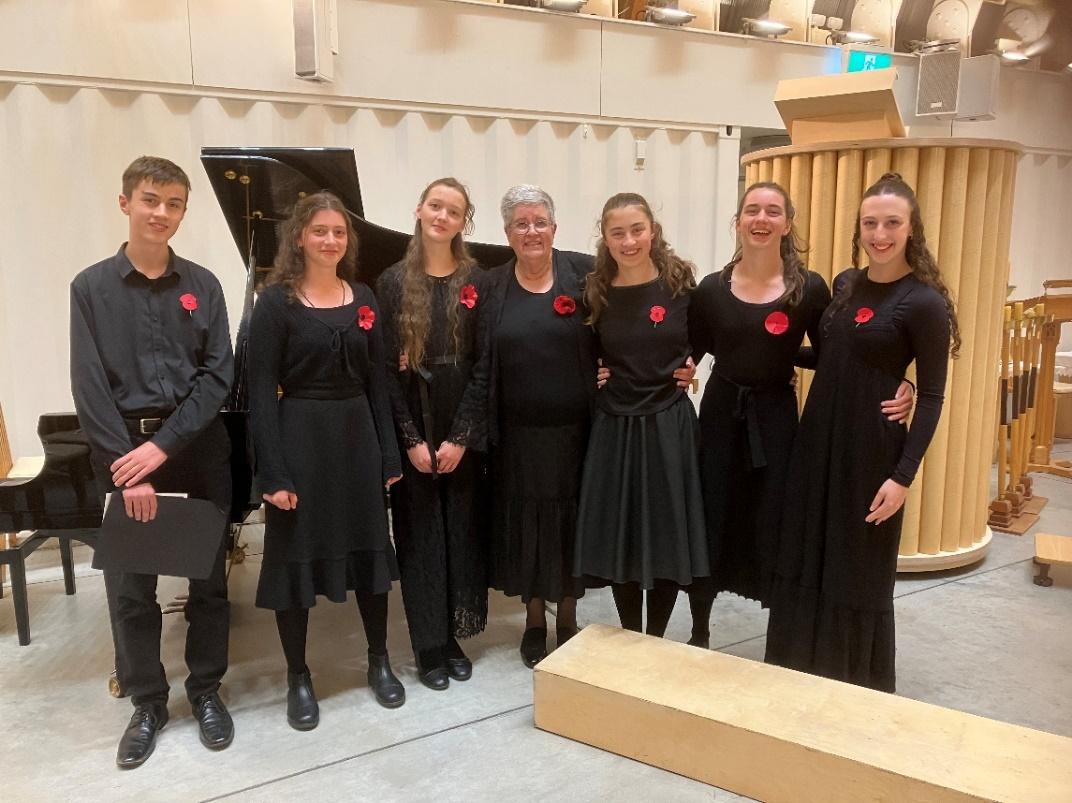
    The audience sat waiting, restlessly, for fifteen minutes. Then, from an uninteresting side-door, a long line of people emerged, and walked to the front. Their clothes were completely black, and each wore a bright red poppy. These were the Jubilate Singers. With them were six teenagers, five of them homeschooled. They took front-row seats as the singers opened the concert with the traditional Ukrainian New Year’s song of hope, “Shchedryk” (to the beautiful tune of ‘Carol of the Bells’). The concert was called “The Old Lie”:a phrase which refers to the words of Horace, “It is sweet and proper to die for one’s country.”

    Following Shchedryk, the six teenagers who had entered the room with choir ascended the stage. Ben, Sarah, Nikita, Therese, Elizabeth, and Jacinta were announced as the senior members of GraceNotes Chorus. GraceNotes is a children’s singing group which meets in St Albans, Christchurch, each Tuesday during the school term. Rosemary Fisher directs this group and is also a member of Jubilate Singers. Rosemary has given a lifetime of service to education: preschool, primary, and secondary levels, and is passionate about empowering children to successful learning. After many years as HOD of Music (secondary), proprietor, curriculum developer, teacher and teacher mentor both in the State Education sector and in Christian Schooling, Rosemary has returned to choral music since moving back to Christchurch where she has been Chair of the NZCF Canty-West coast Branch for a number of years, Co-ordinator of the Big Sing Regionals/Nationals, and has founded the NZ Children’s Choral Academy.

    Together, the Jubilate Singers and GraceNotes Chorus sang the “Boer War Te Deum”, by Arthur Sullivan, a beautiful piece written to celebrate the end of the Boer War. The voices of GraceNotes and Jubilate Singers rang throughout the cathedral as the audience watched and listened in silence. Then GraceNotes returned to their seats to listen to the rest of the concert. 

    Next on the programme was ‘Pro Patria’, a series of songs based on poems written during, or shortly after, World War I, and arranged and set to music by the conductor and composer, Philip Norman, of Christchurch. This work was premiered in 2015,  and shows the sufferings inherent in war.

    After a short interval, Jubilate Singers returned, with guests, to sing Maurice Duruflé’s “Requiem (1947)”, a piece based on traditional Gregorian Chant but overlaid with rich, impressionist textures. This work, commissioned by the Vichy Government during World War II, stands as a Requiem to all the millions who died in a conflict that was as unnecessary as it was inevitable.

    The choir was joined by two choral scholars from the Royal Holloway College, University of London: James Gooding, baritone, is about to embark on a Masters thesis tracing the development of Choral Music in New Zealand, with a particular interest in that of Christchurch New Zealand. Phoebe Wakefield, a mezzo soprano, just heard three weeks ago that she has been chosen out of 145 applicants to be one of eight choral scholars studying with the Voces 8 ensemble.  Phoebe was one of the soloists and sang the ‘Pie Jesu’.

    The GraceNotes senior choristers are looking forward to their next invitation to sing in collaboration with Jubilate Singers.

    If you are interested in further information about GraceNotes, or in joining with them to sing, please contact Rosemary Fisher at directorgnc20@gmail.com

  • Inspiring Lent Quotes

    Inspiring Lent Quotes

    Image Credit: Andrea Previtali, Public domain, via Wikimedia Commons

    Here are some inspiring quotes for Lent and Holy Week:

    “Lent is the autumn of the spiritual life during which we gather fruit to keep us going for the rest of the year.” – St Francis de Sales

    “The death of the Lord our God should not be a cause of shame for us; rather, it should be our greatest hope, our greatest glory. In taking upon himself the death that he found in us, he has most faithfully promised to give us life in him, such as we cannot have of ourselves.” – St. Augustine

    “The tragedy of the passion brings to fulfilment our own life and the whole of human history. We can’t let Holy Week be just a kind of commemoration. It means contemplating the mystery of Jesus Christ as something which continues to work in our souls.” – Saint Josemaria Escriva

    “When we contemplate the sufferings of Jesus, He grants us, according to the measure of our faith, the grace to practice the virtues He revealed during those sacred hours.” – St. Angela Merici

    “Apart from the cross, there is no other ladder by which we may get to heaven.” – St. Rose of Lima

    “Fasting cleanses the soul, raises the mind, subjects one’s flesh to the spirit, renders the heart contrite and humble, scatters the clouds of concupiscence, quenches the fire of lust, kindles the true light of chastity.” – St. Thomas Aquinas

    “Although we may be able to do but little, the enemy nevertheless stands more in awe of those whom he knows can fast.” – St. Francis de Sales

    “Unless there is a Good Friday in your life, there can be no Easter Sunday.” – Venerable Fulton Sheen

    “Give something, however small, to the one in need. For it is not small to one who has nothing. Neither is it small to God, if we have given what we could.” – St. Gregory Nazianzen

    “What Our Lord did say on the cross was to forgive. Forgive your Pilates, who are too weak to defend your justice. Forgive your Herods, who are too sensual to perceive your spirituality. Forgive your Judases, who think worth is to be measured in terms of silver.” –Venerable Fulton J. Sheen

    “And he said to all: If any man will come after me, let him deny himself, and take up his cross daily, and follow me” – Luke 9:23

    Sources:

    Dickenson, Jessica, “25 Quotes to Prepare for Holy Week,” Catholic 365. 3/25/2024, copyright 2025. Accessed 9/4/2025. Web.

    CatholicTV, “10 Quotes from the Saints to Prepare You for Holy Week,” Catholic TV, Medium, March 24, 2018. Accessed 9/4/2025. Web.

    Montpetit, Reanne, “21 Catholic Quotes to Help You Finish Your Lenten Journey,” Cat. Chat for Kids. Accessed 9/4/2025. Web.

  • Homeschooling like Samwise

    Homeschooling like Samwise

    Written by Monica Aarts

    Image and article used with the kind permission of Family Life International, Australia. Original source: FLI homeschooling, FLI website.

    Monica Aarts is married for seven years and is a mother of four daughters, has been homeschooling her children for around three years.

    Homeschooling is not for the faint hearted. Before having children, my husband and I were determined to homeschool our future children so that they would not miss out on the rich education our own schooling experience had deprived us of. We wanted our children to love our Catholic faith, to read the Good Books, to study Latin, to enjoy Maths, to embrace Music, to wonder in Science, and to have a deep grasp of their own written and spoken word. In short, we hoped to give them the most holistic form of education in the Liberal Arts, all the while growing in holiness.

    I have four daughters aged 6, 4, 2, and a newborn. My main homeschooling philosophy is a mixture of Classical education and Charlotte Mason’s approach. For this reason, I use a range of resources from different curriculums to suit our family. This includes a blend of Memoria Press, The Good and the Beautiful, and Ambleside Online, alongside with the suggestions of Laura Berquist and Elizabeth Foss. A normal homeschooling day looks like our family sitting in our home library where we say a morning prayer together. Then, the girls do 20 minutes of Catechism and a short Latin lesson with their father, followed by two hours of read aloud books and narration journaling with me. Afterwards, we go to the dining table to teach my 6 year old to spell, do maths and work on her handwriting, teach my 4 year old to read, entertain my 2 year old with lots of fine motor skill table work and song, and all the while care for my newborn.

    What my little experience has taught me after officially homeschooling preschool to year 1, is that homeschooling is so much more than a curriculum. Indeed, I can confidently say that our homeschooling experience began from the moment I brought my first-born home and sang her hymns and nursery rhymes.

    Homeschooling is a journey of fostering little minds that naturally wonder, and to continue to form their little minds to desire and seek that which is true, good, and beautiful.

    That is because the early voyage of homeschooling begins by leading our children’s minds to the enchanting world of story, the love of God in catechism, the monotonous plane of handwriting, the ever so rewarding place of reading, the strange conceptual world of maths, and most especially the wondrous world in reality: everything they themselves see, hear and touch in reality – in God’s creation. It is such a beautiful task, but there is a catch: the path is narrow, and the mother must bear all things for their little ones. Indeed, I’ve seen that it is not so much my children, but I myself who have been called most to holiness through homeschooling; because, with each step I have to be Sam Gamgee pulling Frodo up… and to be honest, sometimes it’s tempting to be a bit of a Gollum.

    I’ve also learned – and continue to learn – what Sarah Mackenzie advocates, that we must ‘Learn from Rest’. I cannot force my children to eat what is bitter, but I can tempt them with milk and honey, and I can do it restfully. Young mothers going into homeschooling these days, unlike those of our parents’ generation, are inundated with options on how to homeschool. There are hundreds of different curriculums, philosophies and opinions, and it is easy to get caught up with how to homeschool. There is immense pressure to not make a wrong step in our choice and our approach, lest we fail our children. When I first looked at homeschooling, I began to write up my own curriculum and it was inundated with resources and curriculums that were considered ‘the best’; but what I quickly realised was that I found them difficult to teach and my daughter found them dry and boring. We were both uninspired. We stopped wondering. We felt like we were pushing a heavy load up a hill. In short, they did not suit our family, and they did not bring us closer to desiring the Good, True and Beautiful. A radical move was needed…

    I do not have the means to cram the entirety of the world’s knowledge into my children’s minds. But, I can learn and seek out my unique child’s gifts and strengths and to teach them accordingly. In turn, I can also figure out my own strengths, and find resources and methods that  are milk and honey for my particular child. For example, I am personally a literature fanatic. I love to read and I love to understand what stories mean. For this reason, we read a lot, because the children absorb that love I exude when I read them these stories, and the creative ideas I naturally come up with to get them to understand it more deeply is attractive to them.

    Consequently, homeschooling is not for the faint hearted. It is not just about carefully moulding the best resources and curriculum, but it involves creating a warm refuge where our children’s gifts can be cultivated by the people who know them best and who desire their holiness, while also striving to grow in holiness themselves. Indeed, that’s why I personally feel called, because although the road is narrow, the goal is a treasure. My goal is to be a mother that learns about who my child is and to teach them accordingly, and to help them ‘love that which is lovely’ in an environment that is surrounded by all things Good, True and Beautiful, which means I myself must strive towards this ideal too.

    Article Originally Published:

    Aarts, Monica, “Homeschooling like Samwise,” FLI HomeschoolingFamily Life International website, Australia.

  • Tecorians

    Tecorians

    Eugenie rose from her seat and walked to the front of the room. She introduced the topic of her speech – St Charbel Makhlouf, who she is blessed to be distantly related to. All in the room listened carefully as she talked about his life. This speech was part of Tecorians, a public speaking group in Canterbury, New Zealand, which meets fortnightly.

    Many homeschoolers participate in Tecorians, honing their public speaking skills and having fun. During the fortnightly sessions, they give speeches, make up impromptus, read aloud and have debates, and they also learn how to run a business meeting and a speaking program, and evaluate a speech.

    An evening at Tecorians typically begins with a business meeting, followed by speeches, each of which are evaluated, and an impromptu session. Impromptu topics vary, from “Should everyone have a TV in their home,” to “explain how to survive the Amazon rainforest with a piano” to “give a campaign speech for the eliminate-chihuahua political party.”

    Beatrice has been involved in Tecorians for five years. She says, “I especially enjoy the impromptu session. When it is done well, it allows us to be the crazy people we all are deep down. It also helps some people who are a bit nervous at first to come out of their shells.”

  • Homeschooling Inspired by the Saints – Julie Mischewski

    Homeschooling Inspired by the Saints – Julie Mischewski

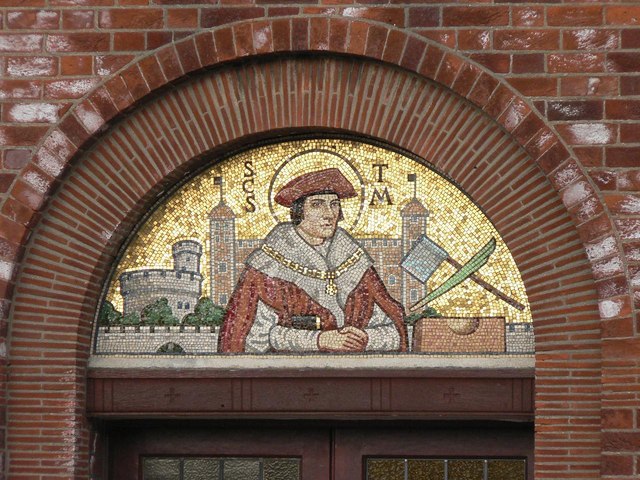
    Image Credit: Chris Downer / Iford: St. Thomas More – doorway detail

    Listen to the Full Interview here

    Julie has been homeschooling for twenty years. Five of her children have finished, and she now homeschools four; age seven, twelve, fourteen, and seventeen.

    Julie speaks about how, when her eldest was four or five, he had already started learning at home with his two younger siblings, and she wanted to continue that. “I just didn’t like the idea of us sending him away to school for six hours a day to get an education. I thought, ‘we already have the perfect environment for education at home, with the people who love him the best.’” At home, she could educate how she wanted, and choose the curricula best for her children.

    In school, children are away from home for a large part of the day. However, through homeschooling, “we could take our time at home, reading a lot of books, going on excursions, just spending great times together with my husband and the children, out in nature, learning about the Catholic Faith.”

    Julie says, “If we make God first in our hearts, then that’s the basis for trying to pass the Faith on to your children.” God uses the Faith of the parents to instill the Faith in the children. Julie talks about “bringing it into daily life with daily prayer with the children, with Mass and the sacraments, with reading the lives of the saints…helping children realize there’s a great of witnesses around them, that the Saints are watching them and helping them…my husband has been especially really good at passing on knowledge in the area of apologetics.”

    Now, Julie’s children are involved in the wider Catholic community, serving the Parish by helping run youth groups and Sacramental programs. Julie and her husband, Dean “tried to immerse them in the Church life, because we ourselves feel immersed in the Church life, and somehow the Holy Spirit has just used that and worked in their lives…the Church has served us and I guess they feel like they would like to serve the Church.”

    Julie speaks about how the writing of the Saints “really inspired me in homeschooling and in family life.” She mentions a book called Story of a Family, by Fr. Piat, a book about St Therese’s family, which “just showed me how much they [Louis and Zelie Martin] loved their children, and how they wanted to bring them up close to the Lord.” The Martin parents were careful about their children’s education. Julie “gained strength from Zelie’s writings…I knew I wanted to have a family life like that.”

    Julie was also influenced by a book called Born for Friendship: the Spirit of Sir Thomas More, by Bernard Basset. She says, “his children learned at home. He had tutors for his children. And he probably would have liked to teach them himself, but he was often away on business.” St Thomas advised his children’s tutor, “warn my children to beware of pride and haughtiness, and rather to walk in the pleasant meadows of modesty, to put virtue in the first place, learning in the second, and in their studies to esteem most whatever may teach them piety towards God, charity to all, and Christian humility in themselves.” Julie says, “that’s what I really want for our family.” For St Thomas “learning was to cultivate the soul” and he had a very peaceful, Faith-filled atmosphere in his home, which Julie tries to cultivate in her own home.

    Some other resources Julie has used are MODG, Seton, Formed, and a book called A Charlotte Mason Companion, by Karen Andreola. Julie says, “I think it’s really good to try and glean the wisdom of the people from long ago”

    Julie says, “we’ve always liked the children to stay active, because we think that’s important for health, and Dean and I were quite sporty when we were younger, so the children usually play a winter sport, but we definitely don’t like to overdo it or have it overrunning our family life…you’ve got to decide how much you’re going to do of it because it’s always trying to drag you in to do more and more.” She says, “a few of our children especially..have gone on to excel in some of those areas and homeschooling’s been really useful for that.” It gives them flexibility to train when they want to, whether it is in the morning before study, or later in the day. It also prompts them to take initiative. She mentions that having two older brothers to play with really helped her daughter excel in basketball.

    The Mischewskis have also done acting and drama. They were involved in a drama group. When the eldest four kids were four, six, eight, and ten, they loved Narnia, and spent hours practising and acting out the The Lion the Witch and the Wardrobe. Now, some of the children are involved in a choir.

    Julie says, “I’ve never really been too worried about socialization…there’s so many things you could do, especially in Canterbury, that you could be doing something every day, all day, extracurricular, and that you just won’t get your schoolwork done.” They choose several things per term, such as swimming lessons, choir, public speaking group, and Christian family meetups. Julie says “the greatest socialization is going on in your family, in your domestic Church, because you’re there for the sanctification of each other.”

    Julie mentions that Laura Ingals Wilder was “isolated for months on end, and I don’t think you could say that Laura Ingals Wilder wasn’t well-socialized” The Mischewskis have had opportunities to socialize with school children through sport, but “socializing with different age levels” is also important, and the kids often get to do this when they have adults over for dinner, who the kids might not know.

    Homeschooling can be exhausting sometimes, especially when you have lots of kids under age ten, and are waking up in the night to feed the baby. Julie also says, “I’ve got the benefit now of looking back, and seeing how the children…managed to get to adulthood okay,” something she didn’t have when her eldest was five and she first started homeschooling. “You doubt yourself,” she says, “even today…I feel like I’m not doing enough academically.” Sometimes it can be tricky to homeschool when you have toddlers; “I love them so much, but they make homeschooling really hard, they want to join in, and get up on the table…For us it was always important that every child was happy…sometimes [this meant] we would just have to stop work and go down to the park.”

    Some of the highlights of homeschooling for Julie were “seeing our children just become each others best friends, enjoying the close family bond that we’ve had, seeing our children care for each other, love each other, become each other’s best friends, getting on well together, having happy family life…seeing the children’s Faith grow…seeing that they have Faith, meaning, joy, hope, security love…and I think homeschooling has helped that.” She also mentions, “spending lots of great times together doing things, [homeschooling] gives you a lot of freedom to do things…you don’t have to stick to school terms if you don’t want to, you can go on trips if you want to.” While homeschooling, she is “learning with the children. Books that I didn’t read when I was a girl, things that I didn’t learn, my kids are teaching me now.” Together, they read aloud, stories about the Saints and great literature.

    Julie’s advice is, “as homeschooling parents you’ve got to realize that you’re in it for the long haul, and so you don’t want to burn out early on…You’ve got to look after yourself, you’ve got to look after your spouse. You want to have a strong relationship with your husband, so your children see that and they can gain security from that…Work together as a team, you and your husband.” As a mum, you should “keep replenishing your soul with good things from God” Spend time in prayer daily, grow in your Faith and grow intellectually, pursue your hobbies. Julie tries to read every day, often scripture. She says, “decide to love your vocation as a wife and a mum…realize that the joy of the Lord is our strength…It does get easier as you go on, and you look back and you see that the children have come through okay.”

    Listen to the Interview

  • Why Homeschool – Marion O’Halloran

    Why Homeschool – Marion O’Halloran

    Written by Marion O’Halloran

    Article and image used with the kind permission of Family Life International, Australia. Original source: FLI homeschooling, FLI website.

    Marion O’Halloran has been married to Brady for 19 years, has 6 children and has been Homeschooling for 14 years. Her father, Bernard Sadler, was one of the founding members of what is now Family Life International, Australia.

    I never intended to homeschool. As a young single woman, I thought for sure that I would be sending my then-theoretical children to school. I was sent first to a Catholic Primary School and then to a private girls’ school. I have mixed feelings about both of those experiences but I never once questioned the “rightness” of sending children into an institution outside the family home to gain an education. At least, I never questioned it until my children were no longer theoretical.

    Becoming a parent for the first time made me take seriously everything that had previously been merely theoretical, but also to take seriously all the things I wanted my children to inherit from me, and in particular, my Faith. The situation with regards to teaching children the Catholic Faith was pretty dire when I was at school in the 80s and early 90s, but now it was that same generation that would now be teaching MY children. My own faith education, being what it was, was objectively far more advanced than so many of my peers, but I was only just beginning to discover just how lacking it really was despite that. I couldn’t in good conscience send my children into a system which had failed so many in their faith development, including my own. So I decided to homeschool. My primary motivation was my Faith and how I wanted it to be taught to my children.

    I say “I” because the bulk of the decision and the bulk of the work involved in this naturally fell to me. My husband was and is very supportive but I was the one who would be at home with the children while my husband went out to work. I think it is important to acknowledge that, by and large, it is the mother of the household who will school the children. But rather than see this as an extra burden, I would like, rather, to paint this as a natural extension of our primary role as mothers. We who helped teach our children to sit up, feed themselves, wash themselves, brush their teeth, walk and talk, now teach our children to read and write and think critically. Why should we think that we aren’t able to provide our own children with an education? We who knew them from the earliest moments of their existence, who know them and love them better than anyone other than God? I would suggest that if our own schooling made us unfit to teach our own children, then the education we received was indeed sorely lacking, but why on earth would we then send our own children into it to be similarly poorly educated?

    So I started. I kept telling myself it would just be for that year and then we would see how we went. I kept saying that to people who questioned me as to whether I would send my kids to school too – it kept them off my back. I started to teach my child in the same way that I had been taught: I sat her at the table with a book in front of her, allocated a certain time to each subject and thought that was how it would be, nay SHOULD be. Let me now tell you that homeschooling your children will be every bit YOUR education as theirs – but such a rewarding one. That was when I discovered that this idea of putting our children into a room with 30 other children of the same age to learn about a certain subject in isolation from everything else, in a set period of time, outside of both their interest or any relevance to them, was not actually educating them. Sure, they were being schooled, but not educated. I am so thankful that I didn’t persist in that model but learned that homeschooling is best seen as fitting in naturally with the ebb and flow of family life.

    Before I knew it I was 13 years in and with 5 more children and now with the very real possibility of homeschooling for another 15 years, God willing. Apart from a few hiccups along the way, some more serious than others, I have only been glad of the choice that we made. The benefits of homeschooling are many. Our children are good friends with each other. Sure, they fight and bicker like any siblings do, but the strong familial ties that are created with the help of homeschooling are an anomaly in today’s society. Our children are excellent autodidacts: I can’t tell you how much I have learned from my younger son on birdlife and marine animal life alone! Two subjects I previously thought were dead boring were brought to life by my son. I often say that I have now received an excellent primary school education after homeschooling my own children. We are learning together. Our children are able to pursue their own interests and passions without the constraint of the 40 minute block of the classroom. They are able to learn about their passion and without reference to a timetable or a test. I can show the world to them in a safe and loving environment without the bullying or the progressive political agendas that permeate so much of our society and educational institutions today. They are learning to love learning. We have beautiful friendships with other like-minded homeschooling families and we have been able to create a community they thrive in.

    I’m not going to pretend to have all the answers. We’re still raising our children and have only just gained an adult child this year. I don’t know what the future holds. I don’t know how this journey will turn out. The world can be so ugly but I believe that by homeschooling our children, my husband and I have been able to give our children a beautiful childhood and a firm foundation in our Faith.

    Article Originally Published:

    O’Halloran, Marion, “Why Homeschool,” FLI Homeschooling, Family Life International website, Australia.

  • “Faith lived out in Action” – Ruth Green

    “Faith lived out in Action” – Ruth Green

    Image Credit: I, Luca Galuzzi, CC BY-SA 2.5 https://creativecommons.org/licenses/by-sa/2.5, via Wikimedia Commons

    Watch The Interview

    Ruth has been homeschooling for fourteen years, and talks about why she decided to homeschool. When she got married, she and her husband, Matt, liked the idea of homeschooling, but didn’t know a lot about it, as both had attended school. Ruth says when Sarah, their eldest, was ready for school, “I doubted myself. I doubted that I had the capability or the capacity to homeschool.” Sarah went to school for a year and a bit, and “unfortunately she had a pretty rough experience with school and was very miserable. And after she’d been there for about a year and a bit we thought….we need to do something.” They looked into private schools, but these tended to be expensive, and they looked into schools focusing on alternative methods, but decided against these because they wanted a Faith-based education for their children. Then, Ruth explored homeschooling through reading books and talking to people.

    When the Christchurch earthquake hit, the Green family had to move house because of earthquake damage, and so were away from school for a month. Ruth reflects, “I really think God used the earthquakes to kind of throw us into something that we needed to do as a family and didn’t have the courage to, step out of the boat, as an analogy, and he provided the means in that sense, and also gave us the chance to say to our families, that weren’t very keen, that we were just doing it because of the earthquakes…here we are fourteen years later, never looking back really.”

    Reflecting on her decision to homeschool, Ruth says, “I didn’t think that I had an education that was high enough…to teach my children…and I failed to realize that we all, as parents, are equipped with everything we need to educate our children – that God has made us that way, and that I needed to trust that he would provide, not only the means, in terms of community and resources, but he would give me the graces to do it as well. And they are your children – they are uniquely yours – and you are given to them and they are given to you. There is that beauty in that relationship, which education then comes from. Because you’re teaching them to talk and to love and to serve, and to do all those things right from the minute they are born.” Education continues that. Ruth advises other homeschoolers, “Have Faith in yourself and trust that God is going to be with you on the journey, and just take it…step by step.”

    Ruth says that through homeschooling her children, “I have seen every stage of their development as a person…emotional development…spiritual development…I get to see them, and I get to be a part of that.” Mary pondered in her heart, as she saw Jesus grow up in Nazareth. A homeschooling mum sees and ponders on her children, as she sees them grow up in the home. Ruth says “my absolute favourite thing about homeschooling is the relationship we build with them [the children], but they also build with each other.”

    In the home, the family experiences “Faith lived out in action.” There are nine children in the Green family. Every time the family has welcomed a baby, the children’s “hearts have had to open to allow room for another person, just like as parents, your heart expand and that love grows.” There are many opportunities to live out what you learn in the Catechism. In homeschooling, “every day you’re serving. Every day you’re having to be patient and make space for someone else and wait your turn…in an environment which really fosters that love…in the homeschooling environment, in a large family, you have to…learn to give of yourself.”

    Ruth shares how, at the moment, her youngest children are a two-year-old and a three-year-old. Her three-year-old needs quite a lot of attention. Once, when this was challenging, Ruth “said in exasperation, ‘oh my goodness, maybe we send him to preschool, guys, so that I’ve got more time for you,’ and they looked at me with such horror on their faces like I had said a dirty word. They were like ‘mum we cannot send him away. That is not what we do…We love him and we’ll figure it out and work it out and do this as a team.’”

    When she first started homeschooling, Ruth was very excited about all the available extracurriculars, “and I think we realized very quickly, you burn out very quickly.” If you do too many extracurriculars, “there’s no time for your main subjects, your main academics at home. But I also found there’s no peace at home when everyone’s stressed out about trying to find shoes to go out the door…so we just pray and discern and look at what it is that is most needed at the time.” They are currently doing swimming, a teens group, and fortnightly Catholic homeschool meetup – Ruth says they are doing “less things this term because we needed a quieter term.” It is important to have “wisdom… [to] know what is going to be doable.” Ruth says if they do to much one term, “we have to take a step back the next term and be a bit quieter.” For example, sometimes you may have a newborn baby and stay at home more. Last year, Ruth’s eldest, Sarah, got married, and they were busy preparing for the wedding. Ruth says, “there is a time and a season when you can be very busy, and very out, and very social, and then there are times when you need to be very quiet, and I actually treasure those times when we’ve had very quiet family life, because the relationships definitely get deeper.”

    In terms of resources, Ruth uses many different ones, focusing on each child’s interests. For example, she uses Twinkl, where she has sometimes found Catholic resources, for example, for celebrating Lent. She frequently focuses on a topic, using online resources, and going on educational outings. Ruth says, “instead of using a set curriculum, I pulled from many, many resources.” This can be great for kids who find book-work challenging, as it helps them to learn through projects; Ruth talks about “using topic studies and learning that way.”

    When asked about her favourite thing about homeschooling, Ruth quotes Holly Pierlot’s “A Mother’s Rule of Life,” “We are called to bring God to our children’s spirits, truth to their minds, health to their bodies, skill to their hands, beauty and creativity to their hearts, and in all this, virtue to their wills, and sanctity to their souls.”

    Ruth says the hardest thing about homeschooling is, “trying not to get down on yourself…or comparing yourself to others, or comparing yourself to the school system…when life is busy, when everyone is tired, when no-one’s listening, those moments where you say, ‘am I doing the right thing’” and it is important to learn “to really lean into Our Lord and trust that actually we are doing the right thing.”

    Watch the Full Interview Here