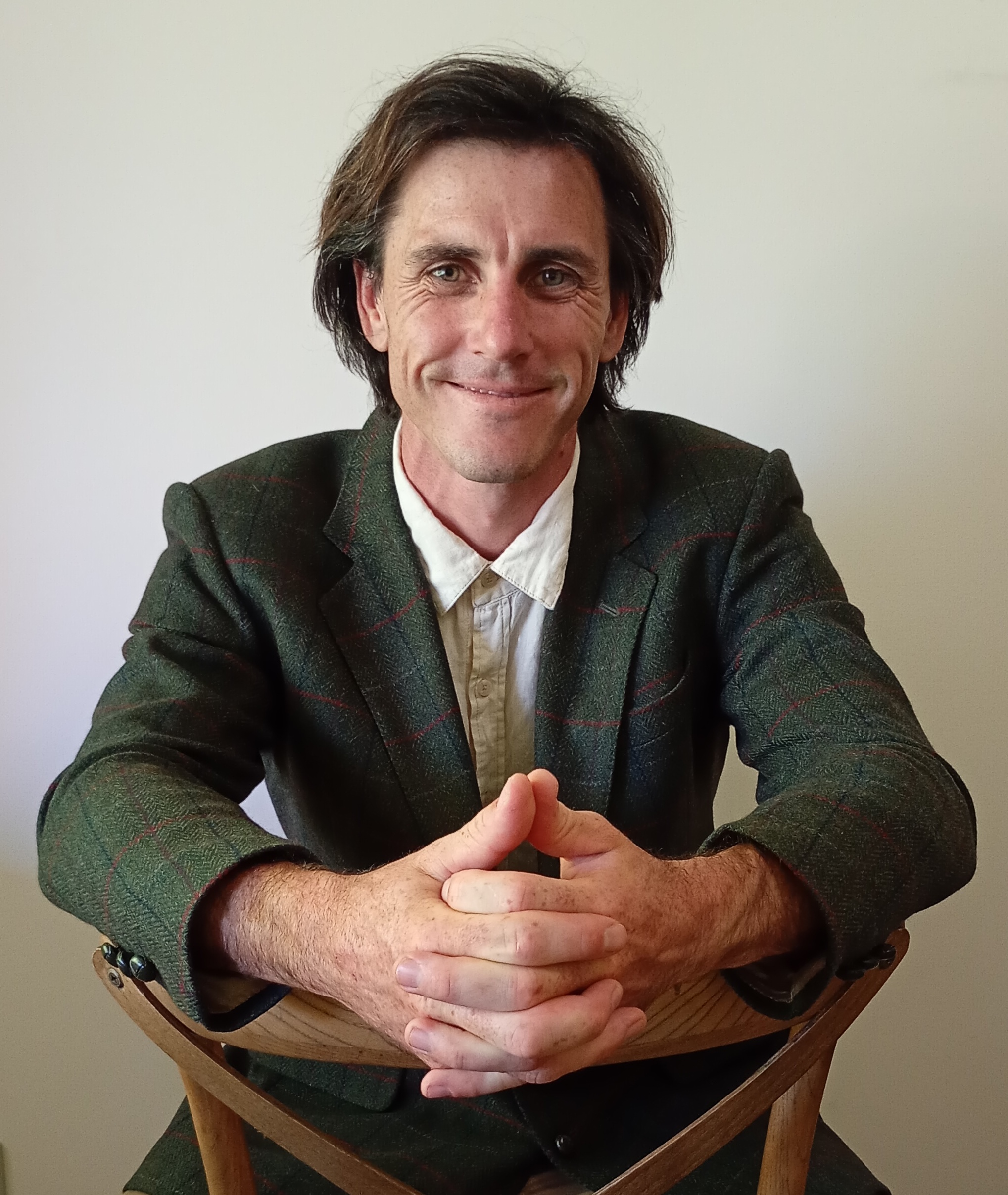
Ben McCabe founded Augustine Academy in 2016, after completing his liberal arts degree, and while pursuing postgraduate studies. He wanted “to give back some of the education that’s been so formative to me.” Over the past 10 years, he has taught hundreds of students, from every state in Australia and even a couple of Kiwis.
The core subjects are Theology, philosophy, history, and literature, which are taught along with public speaking, grammar, logic, rhetoric, drama, and agriculture. While some adventurous students come for the outdoor activities, others come for the classical education, and some are drawn to both. Around 85% of students are homeschoolers who want to continue to receive a classical education, and Augustine acts as “a stepping tone” between secondary and tertiary education. It is “a context that is wholesome, where their Faith will be supported and where they’ll be around peers that are like-minded.”
Ben said classical education “absolutely” supports Faith formation. He explains, “It’s done nothing but strengthen my personal faith…witnessing the students that have come through Augustine academy, it seems to have matured them in their faith.” Ben says that “history supports that,” as “classical education helps the Faith, it also helps with keeping sanity amongst a world of chaos.”
Classical education is heavily based on the classics – the great works of literature, which, throughout history, have acted as sources of truth and wisdom. Ben explains that a classical education is “aimed to make you a critical thinker.” He mentioned how propaganda was weaponized during WWI and II, and said that it seems that, today, “[modern] education has been weaponized to promote certain ideologies that I don’t frankly align with much at all.” A good education counteracts this, because “rather than using education as propaganda…the agenda of classical education is to make you a critical thinker. And regardless of your religious proclivity, that ought to be prized, valued and sought after.”
What about people who can’t afford expensive classes? Ben replied, “The best education you possibly get does not cost more than a few dollars.” Great books are very affordable. He says that, although he has spent years at university, much of his learning, and most of his lecture material, comes from his leisure reading.
For parents who want to give their kids a good education, he said, “the first step is they should get their child’s phone, if the child has a phone, and throw it in the bin, or better in the fireplace. Or just make sure it’s destroyed, there’s not a single molecule left of that device. And then once that’s gone, then make sure there’s really good books in your house…if you want to make a kid do something you want to make it as easy as possible. So if you’ve got steak and skittles both in the fridge, then the kid’s going to eat skittles most of the time, but if there’s no skittles and the kid’s still hungry then they might consider the steak.” Similarly, if the easy distraction of a device is not available, and there are “plenty of classics littered throughout your house” then children will be more likely to read the classics.
Ben emphasizes the importance of getting away from devices in order to read, “you’re always going to choose the path of least resistance. If you’re bored and you want stimulation, you’ll go on your phone or your laptop, but if there’s a book, and nothing but the book, then perhaps you’re going to actually pick the book up….Aristotle defines education as teaching a person to love the right things, and to learn that actually Shakespeare has more to offer than Tiktok is a step in the right direction.”
It’s also important to give know what developmental stage a child is at when you give them books. Likely, it would not be helpful to give an eight-year-old Geoffrey Chaucer to read; it would be better to introduce younger children to the Narnia Chronicles, Robert Lewis Stevenson, or Sir Walter Scott. Then, they can read Chaucer when they are older.
Ben emphasizes the importance of good literature. As there is no point eating food which will not nourish your body, there is no point readings books which will not nourish your mind and soul. Rather, “only read stuff that is worth your attention and is going to challenge you and expand your capacity for critical thinking…tackle the books that have formed society and transformed society.”
Ben’s study tip is to ask yourself, “when am I engaged maximally at the task at hand?” He mentioned that he and his wife get up at 4.30 or 5am to find time for prayer and study before their children are awake. He also recommends being aware of what your attention span is; when it ends, it is time to have a break. Do something “Completely and utterly different” in your break. If you’re studying on your laptop, don’t watch You Tube during your break. Rather, go outside and do physical activity. Pay attention to when you are most alert; usually, that is the morning.
A motivational technique is measuring your attention span; it will be very rewarding when it increases. Or measure how much you can write before becoming distracted. Ben says, “Motivation’s a massive component of high performance with your studies. You can’t feel motivated unless you see progress. You can’t see progress unless you’ve got markers.”